


Don’t Let Me Be Stupid
In the 1960s/70s, Flip Wilson coined the phrase “the devil made me do it.” Eve had a similar response in the garden when she said “The serpent deceived me, so I ate.” As long as we live we will face temptation. Temptation is an enticement to get a person to act contrary to God’s will. Temptation in itself is not sinful, but the yielding to the temptation is.
WHAT IS GOD’S RESPONSE TO THE TEMPTATION?
1 Corinthians 10:13 says “No temptation has seized you except what is common to man. And God is faithful; he will not let you be tempted beyond what you can bear, But when you are tempted, he will also provide a way out so that you stand up under it.” You are not alone in the battle at all. Perhaps most important, God is with us and offers a way out. We should choose it.
WHAT IS OUR ROLE?
If we prepare, resist, and pray, we will be better prepared to battle temptation. This is planning and structuring the course of your day to avoid what is tempting you. Preparation will have our eyes looking for the way out and not yield to sin. Joseph refused Potiphar’s wife. After refusing several times he ran out of the house. The Lord did show him favor and kindness and was with him. Are we praying daily that He “lead us not into temptation” so that when we face the temptation we have the strength to resist and be ready with a wise response?
Matthew 26:41 says “Watch and pray so that you will not fall into temptation. The spirit is willing, but the flesh is weak.” Will I continue to do what I want or turn from the temptation? Pray and ask for help.
Years ago a dear pastor friend was sharing his wisdom with a group of us. He said, “If you live your lives with God as the leading role and you as the supporting cast, your choices will be much wiser than if you were the leading role and God was the supporting cast.”
I think of this often and I see how it can even pertain to battling temptation. Our eyes on Him will provide a holy focus in and through the temptation. Satan tempted Jesus but he did not submit to the temptation. Jesus’ response was using God’s Word and so can we!
Learn from Eve - Don’t listen to the lie
Learn from Joseph- Resist
Learn from Jesus- Use God’s Word
Tammy De Armas
EFCC Member


The Expected Battle
I remember saying, ‘Everyone else is doing . . .’ whatever it was I wanted to do. The reply: if everyone else jumped off a cliff would you jump too? Life is full of cliffs and God allows them in our lives sometimes to grow our faith in him and learn to make good choices. We pray “Lead us not into temptation but deliver us from evil” but does that mean we will never be tempted, no. Jesus was tempted by the devil in the desert for forty days. Does it mean that God wants us to be tempted, no, but he allows us to make the choices that might lead us there. He gave us free will. And what if we, even as believers, fall into temptation and sin? We know God can deliver us from evil situations, people, and even ourselves. But yes, there will often be consequences.
If I choose to run with a crowd who jumps off cliffs, I’m putting myself in danger of following them right over the edge. We know the enemy of our souls is orchestrating this scenario behind the scenes, but we play a role because we have choices.
The trials and tests God allows also have a purpose as James says, “Consider it pure joy, my brothers and sisters, whenever you face trials of many kinds, because you know that the testing of your faith produces perseverance.” and Ephesians 6:12, ”For our struggle is not against flesh and blood, but against the rulers, against the authorities, against the powers of this dark world and against the spiritual forces of evil in the heavenly realms.”
The last thing we should do as Christians is live in fear of evil cosmic powers. The good news of Ephesians is that Christ is already sovereign over all such powers, we have been delivered from the domination of these powers through Christ, and our role as individuals and the church is to proclaim victory over the dark forces through Christ. We are part of something really big.
So how do we prepare for these expected spiritual battles? We want victory but sometimes the greatest move is no move at all. (Be still and know that I am God) We can prepare by being obedient, praying without ceasing, studying His Word, in other words putting on the whole armor of God. (Ephesians 6:10-20) The Lord will give us what we need but victory may not happen in the way we expect it so that people will know it is the Lord. Jesus never lost a battle and he never will. The evil in this world will not prevail forever, so be encouraged, friends.
Lord, help us to be prepared for spiritual battle by knowing our enemies’ tactics, putting on your armor, praying constantly, and giving you the glory. Amen.
Deb Hill
Exec. Admin. Assistant

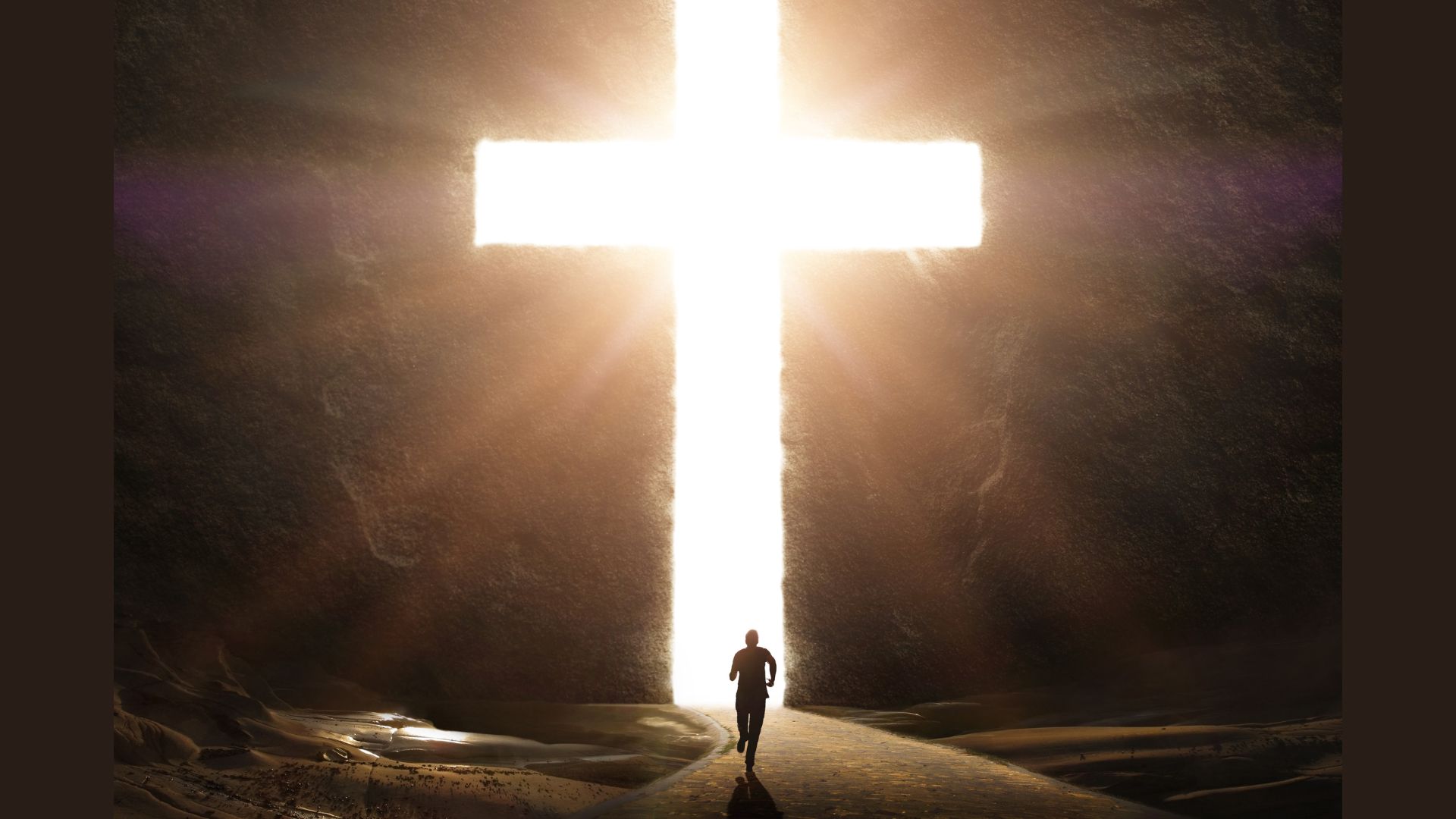
Return to the Cross
“and forgive us our debts, as we also have forgiven our debtors.” Matthew 6:12
Many of us will remember the horror of what happened on October 2, 2006, in an Amish one-room school in Lancaster County, Pennsylvania. A mentally ill, suicidal man entered the school room and shot 10 school girls before shooting himself. Five of the girls died and this peaceful quiet religious community became the center of the nation’s focus, not only on the event but what happened subsequently. The Amish community forgave the shooter on the same day this occurred. They forgave not only in words but in deed by providing a meal for the family of the shooter. At the funeral service for this man, forty Amish showed up to love, nurture, and live out forgiveness. Money that poured in from around the world was given to the shooter’s family. The Amish response completely mystified and astounded the secular world. Sociologists came to do a study on why the Amish could forgive something so tragic, to find out that they live a life adhering to forgiveness because of Jesus’ sacrifice on the cross.
They understand the magnitude of that cost for the sin of the world. “...forgiving one another, just as God through Christ has forgiven you.” Ephesians 4:32
That does not mean forgiveness is easy. Many of the Amish community have forgiven, but still deal with emotions that may not have caught up with the action of forgiveness. But forgiveness is ingrained in their character and to stay angry will be corrosive…so they return to the cross.
If we choose not to forgive, what are we saying? Could we be saying that Jesus’ shedding of His blood and the breaking of His body is not enough; it isn’t sufficient sacrifice for forgiveness to occur? John Walvoord, professor at Dallas Theological Seminary says this about the Matthew 6:12 passage:
“Though God’s forgiveness of sin is not based on one’s forgiveness of others, a Christian’s forgiveness is based on realizing he has been forgiven. Personal fellowship is in view in these verses. One cannot walk in fellowship with God if he refuses to forgive others.”
You and I must return to the cross and remember. Remember that ‘we were yet sinners’ when He died for us, remember what the cost was for us to be forgiven, remember when we received that forgiveness.
Meditation: Read slowly, prayerfully through Ephesians 4:32 and Matthew 6:12. What does the Holy Spirit impress on you? Is He telling you to ‘Return to the Cross’? How might that free you to deeper fellowship with the Lord?
Francie Overstreet


That Which is Owed
Car, rent, mortgage, 2nd mortgage, credit card, college, dental work, and furniture are all things I have been, or am, obligated to make payments on. Debts. “and forgive us our debts, as we also have forgiven our debtors.” – Matt 6:12
Why did Jesus teach us to pray, “Forgive us our debts” instead of Forgive us our sins?
The Greek word for sins is hamartia and the Greek word for debt is opheilé. This verse uses opheiléma (that which is owed.)
In the Roman era, people who couldn’t pay debts were enslaved by their creditors or imprisoned until they, or other people on their behalf, paid off the debt. There were no declarations in chapters 7 or 13 bankruptcy available. But Jesus prays that what we owe might be wiped away in the same manner that we wipe away what other people owe us.
Paul encourages believers to “Owe no one anything, except to love each other, for the one who loves another has fulfilled the law.” – Rom 13:8. The word “owe” in that verse is the same Greek word as debt, opheilete. Jesus used that word in John 13:14, translated as “ought” or “should.” After washing his disciples' feet he says, “If I then, your Lord and Teacher, have washed your feet, you also ought to wash one another's feet.”
Love is intrinsically involved in the forgiveness of debts. Love (forgiveness, service, sacrifice) is a debt that can only be paid in full by giving one’s whole life. That is the example Jesus sets for us to follow. Think about a debt you ought to lovingly forgive today.
Pastor John Riley


Make the Right Choice
The word forgive means different things to different people. Someday when I feel it, maybe I’ll forgive him/her unfaithfulness. How many people do you know who still haven’t gotten over a broken relationship/heart? Years later, they are still talking about the wrong done to them. The danger is, they are completely unaware of the damage to their souls and every other relationship because of it. A fight over the parents’ estate, the hatred felt towards someone who hurt their child, or any injustice in life we face we just can’t forgive–or think we can’t. Lord, are we expected to forgive someone who not only hasn’t asked for it but doesn’t deserve it? Surely we can’t be expected to forgive someone who stole our business, or worse, a drunk driver who caused an accident and killed a family member.
When we don’t choose to forgive someone because we long for them to experience our pain and we long for justice, it becomes a lingering debt that just keeps growing in our hearts. The pain doesn’t go away, it gets worse. What do I mean by “choose?” I mean tell God and then if possible the person you forgive them, whether they’ve asked or not. Not because you “feel” like it but because God requires it, and why, because He loves us. He wants us to have his peace and joy in our lives, which is impossible where there is a bitter root of unforgiveness.
Start praying for the person you choose to forgive. Prayer is powerful. The Lord unleashes his power and you begin to see the person as God does, someone worthy of grace and mercy. Forgiveness doesn’t always mean restoration of a relationship but it does mean healing in your heart. You aren’t required to be best friends with someone who has done great harm. You might have the boldness to speak to the person and offer grace, and maybe even share that you are praying for them. Does that seem impossible? Nothing is impossible for God and he wants the best for us! And our debtors!
Our Father heals any situation or relationship when we humble ourselves before him and remember that he forgave us a lifetime of sin or wrongdoing at the cross and pours out his grace and mercy daily because he loves us. What does he expect us to do? Take a deep breath, tell him how you honestly “feel” and ask for his help, and then choose to forgive. Forgiveness is a process, not a magical moment. Maybe you’ve buried that bitter root so deep you’re not even aware of it anymore. Today ask the Holy Spirit to reveal any unforgiveness in your heart and pray . . . Create in me a clean heart, Oh God, and renew a right spirit in me.” Psalm 51:10
Deb Hill

More Bread, Please….
When my youngest son was about 5 years old, he remarked, “I don’t know for sure what heaven will be like, but I know there has to be bread there.” He said this while savoring a piece of hot, buttered French bread, fresh from the oven. I nodded, really hoping he was right about that one.
There’s something about bread…sourdough, croissants, biscuits, yeast rolls, bagels, cornbread, banana bread ... fresh bread is a comfort food in a class of its own.
Ever had a piece of bread that appeared fresh, only to find out it was very very stale? Gross, right?
Sadly, fresh bread doesn’t stay fresh for very long.
Remember back in Exodus, after Moses led the Israelites out of Egyptian bondage, through the Red Sea? God provided for them. He gave them a form of bread they named Manna. Every day this honey-sweetened wafer bread would fall from the sky, enough to feed more than a million mouths! The day before Sabbath, their day of rest and worship, they were instructed to collect a double portion. But the other 5 days they were to collect only enough manna for that 1 day. If they collected extra, Exodus 16 tells us, it would stink by the next morning and be full of maggots. Lovely. You learned quickly to follow God’s instructions.
What was God teaching his chosen nation? He was training them to trust him. They had been looking out for themselves, trusting no one else for the past 400 years. There’s not a lot of security when all you’ve known is a life of slavery. Instructing the people to gather food every day, but only a small and set amount, forced the Israelites to put their trust, all of their hope, in a God they were just getting acquainted with. Relying on themselves felt right. Relying on an invisible God seemed risky. Would he keep his word? Would he remember us? Would he forget or be late? Would he run out?—even just once? It took trust. It required obedience. It’s faith that God wanted.
Hebrews 11:6 says that without faith it is impossible to please God.
God didn’t want their confidence to lie in their ability or their abundance. He wanted them to want Him. God the Father wanted to sustain their every need, every single day.
Guess what? He hasn’t changed. When we pray, “Give us today our daily bread” it’s a reminder for us that we need to need Him—today, and every tomorrow. God, we need your presence, your spirit, your wisdom, your peace. Please give us what we need Lord, We need you, Lord.
Every
Single
Day
Donielle Winter


A Debt We Owe
I’ve always been stumped by why the Lord’s Prayer in Matthew asks God to “forgive us our debts” instead of “forgive us our sins,” like it’s worded in Luke 11:4. Debts are something that occur on a horizontal plane between me and another person or entity, but sins can occur both in God’s eyes or in the eyes of another person due to my actions toward them. The Lord’s Prayer encompasses both our relationship with God as well as our relationships with other people.
The Greek word used for “debts” in Matthew 6:12 is “ofeiletes” which can either mean debt in a monetary sense, as well as in a moral or social sense. Therefore, if you or I offend someone else, we have incurred a “debt” (i.e., a moral obligation) that calls us to make things right with them. That’s what Jesus is talking about in Matt. 5:23-24 when he says, “go and be reconciled to your brother or sister, then come back and offer your gift at the altar.”
Some “debts” fall more under the heading of an obligation we have to the community or society. Examples might be acts of omission, deception, or misappropriation that are detrimental to other people. For instance, if a county official reallocates public funds designated for one program (e.g., foster care services) and uses them for another program (e.g., beach improvements) they incur a moral debt. They haven’t “stolen” money for personal gain but they incurred a debt to society because some children will not get the level of foster care they need. If I spend $250 per week on dining out with my family but regularly fail to budget for an offering to EFCC’s Care Fund, I incur a moral debt to needy brothers and sisters in Christ within our church family. If the world’s superpowers all overspend their national budgets for nuclear armament, the level of world hunger and suffering is likely to increase. Each of these creates a debt to the community or society.
So as we pray for the Heavenly Father to meet “our” daily needs, let us not forget that “our” encompasses the needs of our church family, our community, and the world. May God give each of us the grace to keep short accounts in all of these ways.
Pastor Dave Korinek


Everything Happens for a Reason
I have a confession to make. Spiritual cliches are one of my pet peeves. While I could rattle off a number of cliches that drive me crazy, there is one that stands above the rest. It’s the phrase, “Everything happens for a reason.” That phrase is like nails down a chalkboard for me because it’s often used as a way to minimize pain. It makes God the author of all sorts of evil that is outside of his character. And because it simply isn’t true in the way the phrase is often used.
Where does the idea “Everything happens for a reason” come from? I think in part it comes from stories in the Scripture where God uses painful situations for his glory and good. I think of the phrase Joseph uttered at the end of Genesis. He said, “As for you, you meant evil against me, but God meant it for good, to bring it about that many people should be kept alive, as they are today.” (Gen. 50:20) It’s true that God did use Joseph getting sold into slavery to preserve the nation of Israel, but the story is intended to be read as descriptive, not prescriptive. There are thousands of people sold into slavery every day and very few of them ever end up saving a whole nation. Therefore, what God did through Joseph would not directly apply to them.
The phrase is also loosely based on the biblical truth that Paul stated in his letter to the Romans. He wrote, “And we know that for those who love God, all things work together for good, for those who are called according to his purpose.” (Romans 8:28) However, if we read what Paul is saying, he’s claiming that not everything that happens is originally good - if it were, God wouldn’t need to work it for good. To untangle Paul’s statement from our common cliche, it might be better said that “God makes reason out of all things.” Rather than attributing evil things that happen to God, it might be more biblical to look for God amid the evil to see the way he is working for good even in the hard and painful things.
There is truth to the statement that “Everything happens for a reason,” but not in the way we normally mean it. Everything does happen for a reason, but sometimes the reason is that God has given human and spiritual beings freedom. (Gen 3) Sometimes the reason is that the devil prowls around like a roaring lion looking for someone to devour. (1 Pt. 5:8) Sometimes the reason is that we live in a sinful and broken world. (Rom. 8:19-21) Sometimes the reason is that we and others make bad decisions that don’t align with the way of Jesus. While everything might happen for a reason, God doesn’t always design or cause the reason. Many times he works despite the reason for his purposes.
For full disclosure, I should tell you that I am writing this devotion from a hospital room. We are on day three of waiting to see what’s going on with my daughter’s health.* When my daughter was in writhing pain Monday night, I didn’t say to her, “Everything happens for a reason.” I prayed for her and asked our Father, whom we call Yahweh Rapha, to heal her body. While God rarely causes sickness, I do believe God meets us in a special way when we’re suffering. So, we are on the lookout for ways Jesus might make meaning and good out of something that is not; and we are asking that his will be done in this hospital room as it is in heaven.
Today, pray God’s will be done in your life, and then look for ways that he invites you to follow him as he answers that prayer.
Pastor Ryan Paulson
*Note: While our daughter was in the hospital when today’s devotional was written, we want you to know that Avery is home and doing well now. Thank you so much for your concern and prayers. It is deeply felt and much appreciated.


Heaven on Earth
For my birthday in 1987, I received the first cassette of my very own—Belinda Carlisle’s Heaven on Earth. While there were a lot of good songs on that album, I listened to Heaven is a Place on Earth over and over again. (My poor parents!) I knew exactly how long to hit the rewind button to get it back to the beginning. And it’s back to the beginning that each one of our hearts longs to go as we have an innate desire to see things as they should be. Indeed “he has put eternity into man's heart” (Ecclesiastes 3:11). Our eternity is meant to be spent in the Kingdom of Heaven.
Heaven is the place where all things are as they should be under the rule and reign of God. Scripture tells us that it is a place where there is no illness, no darkness and no striving. Instead, it is a place of beauty, wholeness and abundance. With the world around us scarred by the impact of the Fall and our lives touched by it each and every day, we can yearn so badly to get there and just endure to the end of our lives with this promise of hope at the finish line.
But we are still in the race. From the very beginning, God desired a partnership with mankind and this partnership remains in place as we are each called to be models and bearers of Kingdom here on earth by participating in things that are the Father’s will. The Lord’s Prayer reminds us of this, “Your kingdom come, your will be done, on earth as it is in heaven” (Matthew 6:10). His Kingdom, the Kingdom of Heaven, becomes visible through the embodiment of His will here on earth carried out by those whose hearts are led by and yielded to the Holy Spirit to “act justly and to love mercy and walk humbly with God” (Micah 6:8). And when this happens…”Ooh, Heaven is a place on Earth. They say Heaven, love comes first. We’ll make Heaven a place on Earth. Ooh, Heaven is a place on Earth.”
Jessica Klootwyk
Group & Women’s Discipleship Director


Your. Kingdom. Come.
Our Father in Heaven, hallowed be your name. Your kingdom come, your will be done, on earth as it is in Heaven.
What comes to mind when you hear the word Kingdom? The Kingdom of Great Britain with all its royalty? Or a fictional kingdom as in the Lord of the Rings novels or King Arthur and Camelot?
A kingdom is defined as a country, state, or territory ruled by a king or queen. When a king or queen rules, we call that a monarchy, a government in which a single person is sovereign.
Jesus’ hearers in Matthew 6 knew about kingdoms firsthand—historically the Kingdom of David divided into 2 kingdoms, the Kingdom of Israel and Judah and both went on to be conquered by the Kingdoms of Assyria and Babylon. “Kingdom” meant power, rule, and authority.
Throughout the Gospels Jesus speaks of a kingdom, the power, rule and authority of the Kingdom of Heaven or the Kingdom of God. He repeatedly illustrates what the Kingdom of God is like—comparing it to a mustard seed or an expensive pearl or a wedding banquet at different times. But as Americans, who fought a war against being controlled by another kingdom, we bristle at the thought of an outside power telling us what to do.
When Jesus taught his disciples to pray “Your Kingdom Come”, we can deduce there are other Kingdom options.
I have great allegiance to and great affection for another kingdom—-the kingdom of ME.
When Jesus says in Matthew 6:33, Seek first the kingdom of God… he is well aware that another kingdom is vying for our loyalty. There’s another kingdom I can seek first. And every day I wake, I must choose between the Kingdom of God and the kingdom of ME.
Truth be told, the kingdom of me is pretty awesome. I get to rule. It’s all about me! It likes what I like, it hates what I hate, it primarily functions to agree with my desires, my emotions, my feelings and habits. The kingdom of me is easy and comfortable because it always wants to do what I want to do.
There will always be the temptation to choose MY kingdom and ignore the Kingdom of God.
When I pray, “Your Kingdom come” to the God of the universe, the ruler of all creation,—I’m saying yes to your Kingdom Lord, and no to my kingdom. I’m saying, Father, you rule better than I rule, your agenda and purposes matter more than mine do.
Father….Your Kingdom come
God, what I truly want is to see your rule, your power and your authority manifest over the whole of creation, and in every way, over my life today.
Amen
Donielle Winter