


Emmanuel
And I heard a loud voice from the throne saying, “Behold, the dwelling place of God is with man. He will dwell with them, and they will be his people, and God himself will be with them as their God. He will wipe away every tear from their eyes, and death shall be no more, neither shall there be mourning, nor crying, nor pain anymore, for the former things have passed away.” (Revelation 21:3-4)
I remember moving into my first apartment with my roommate, Hannah, a few years ago. Living with Hannah was totally different than living with my family. I worked 45 minutes away, and we both studied at home most of the time. Though we lived together, we didn’t see one another all that often. My favorite memories in that apartment with Hannah were the nights that we’d sit on the kitchen counters with only the light above the stove on. We would talk like that for hours. It was on those nights that we spent the most quality time together. Living in that apartment showed me that even though we shared a physical space, we were still very separate people.
This passage calls back to a very familiar scene in Exodus, the construction of the tabernacle. The place where God would dwell with His people on Earth. This tabernacle and, eventually, the temple were the designated place to meet with God. These verses not only reflect the indwelling of the Holy Spirit and Christ in the flesh among man, but also point us to a future reality in which God and man exist in the same space.
What strikes me about this in particular is the result of His dwelling. He will wipe every tear from our eyes, and pain and death will be gone. The Lord does not just merely occupy the same space, but His presence transforms everything.
God is not just like a roommate. The distance between Him and us will disappear. The depth of His presence is one that we will only understand when it arrives. May the promise of communion with the Father bring you peace and hope for the future to come.
Kassie Lowe
Young Adults Lead


Heaven on a New Earth
I was shocked to learn that the eternal home of believers, our heaven, will not be in the heavens or the sky. It will be on Earth. Not this Earth, but an earth, the “New Earth.”
So much of what culture envisions as heaven, wings and halos, clouds & harps, heaven as a place that is ethereal and up high, is not what the Bible portrays for Christians in their eternal home. Instead, Revelation 21 describes a vivid picture of a new home on a new earth.
Then I saw a new heaven and a new earth, for the first heaven and the first earth had passed away, and the sea was no more. And I saw the holy city, new Jerusalem, coming down out of heaven from God, prepared as a bride adorned for her husband. And I heard a loud voice from the throne saying, “Behold, the dwelling place of God is with man. He will dwell with them, and they will be his people, and God himself will be with them as their God.” (Rev. 21:1-3)
When this passage describes a new “heaven,” it means the sky and the space above the sky. When it describes a new “earth,” it refers to the place where believers will live with each other and God. Heaven will be on a new earth. Our eternal dwelling place will be on a new planet with a specially made new city.
That new place is an amazing new city on an amazing new earth. Consider these dimensions for a moment. A description continues of the new city in verse 16. This city is bigger than anything humans have ever created. It is 1,400 miles wide and long. The distance from San Diego, CA, to Wichita, KS, is 1,400 miles. It is also that high. The International Space Station orbits planet Earth at approximately 250 miles above the planet. So, a city that is 1,400 miles into the sky must be on a planet that is even more enormous just to have an atmosphere up there. That means the gravity will be much stronger, and the air pressure at the base of the city will be much higher than what we are used to. Therefore, our new bodies will most likely be much stronger in many ways. Spend some time imagining the future in glory and thanking God for what he is preparing for us.
John Riley
Junior High Pastor

From Knowing to Going
Matthew 2:3-6
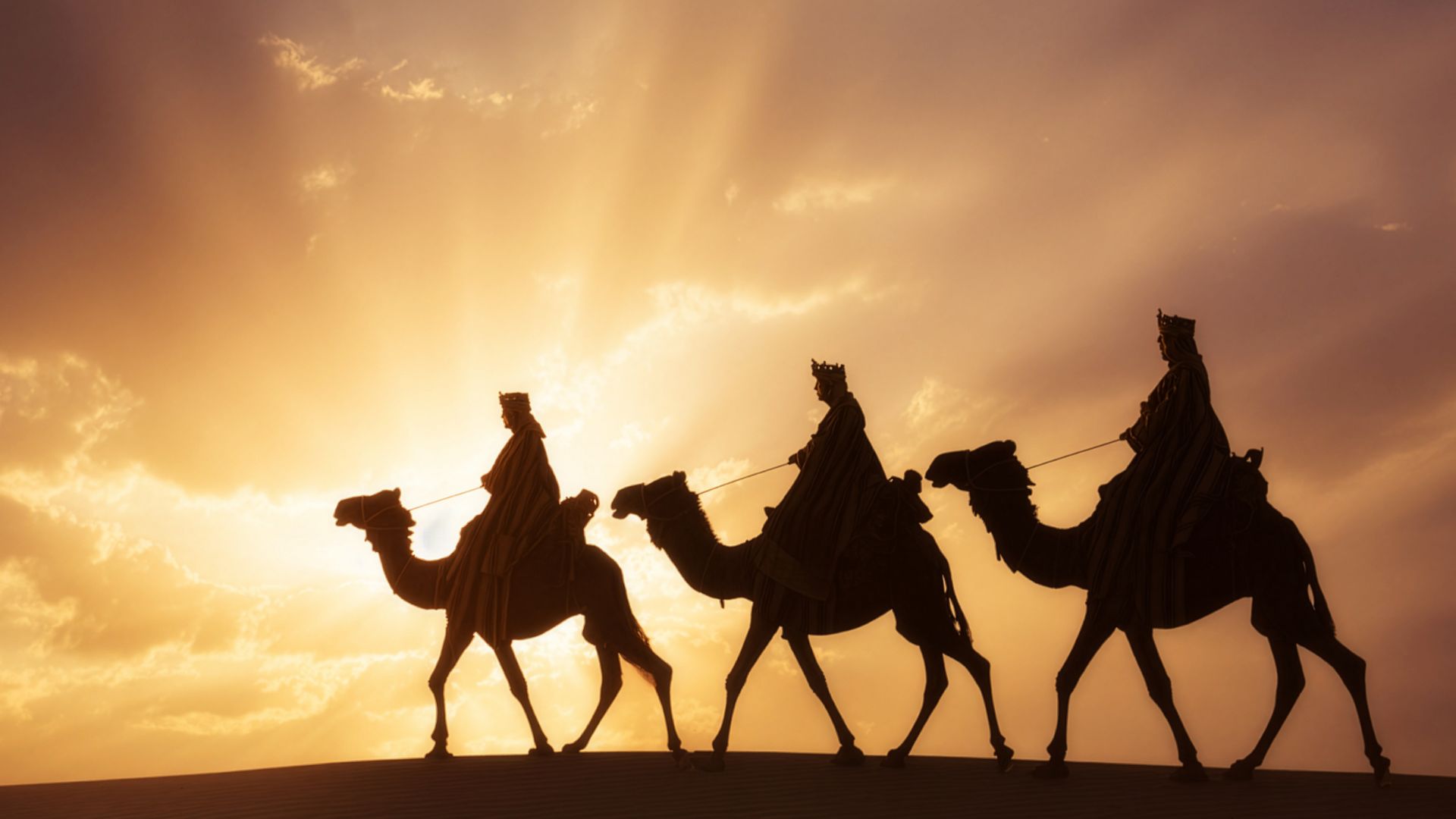
The story of the Magi traveling east, following a star, and arriving at the feet of Jesus to worship, is part of the Christmas story that many of us know well. We even sing a song about it.
“We three kings of Orient are,
Bearing gifts, we traverse afar,
Field and fountain, Moor and mountain,
Following yonder Star.”
We don’t know that there were three kings, but we’ll go with it for the song’s sake. The Magi are a part of the story, and they’re part of the Nativity sets that adorn our mantels. For good reason, they arrive at Jesus’ home and worship at His feet.
But there’s another group in the story, one you never see in a Nativity set: the scribes and chief priests. And they could have been there. They were the ones who told Herod exactly where the Messiah would be born (Matthew 2:5–6). These were people who had built their lives around Scripture. When the question was asked, they didn’t hesitate. They knew the prophecy. They knew the location. They had the right answers.
But they didn’t move. They never went to see the Christ-child for themselves. They never bowed in worship. The tragedy is that Bethlehem was only about five miles from Jerusalem. Five miles, and they never went. The truth didn’t stir them. The promise didn’t interrupt their routines. They settled for knowing about the Messiah without ever encountering Him.
That contrast should give us pause. It’s possible to be close to Jesus and still miss Him. It’s possible to know Scripture, attend services, sing the songs, and yet never take the steps that lead us to His feet. Familiarity can quietly replace hunger. Proximity can dull urgency. We can settle for studying about Jesus instead of seeking Him.
The Magi come with questions, curiosity, and holy hunger; and that hunger moves them. The scribes come with certainty and settle. One group travels hundreds of miles to worship. The other won’t walk five. This story invites us to ask ourselves where we might be settling for information instead of encountering. Where have we stopped short? Where have we grown comfortable with knowing the truth without letting it move us?
Christmas isn’t just about recognizing who Jesus is; it’s about responding to Him. The invitation is still open: Don’t stop five miles short. Seek. Surrender. Sacrifice.
Merry Christmas!
Pastor Ryan


A Heart of Worship
As a child, I remember my mom sharing one of her own favorite childhood memories. It was Christmastime and all of the gifts from Grandma were wrapped and under the tree. My mom’s brother and their cousins looked on in anticipation of what they would get on Christmas morning. My mom however was a bit dismayed because her gift seemed rather small. She was so concerned in fact, that she went to her mom and disappointedly asked whether or not her grandmother really loved her, because after all, her gift was so much smaller than everyone else’s gift.
On Christmas morning, my mom finally got to open the very small gift. What she found was an aspirin bottle… full of dimes. Wide-eyed, she emptied the bottle and slowly counted the dimes, over and over again, in total disbelief at the immense value. She knew that this was a gift of tremendous value and while her mind spun with ideas of how those dimes could be spent, she immediately pulled a few out and declared that she would return them to Jesus when she went to church on Sunday. Her doubt had quickly turned to belief, her disappointment to gratitude, and her skepticism to worship.
Over 2,000 years ago, Matthew tells us in chapter 2, verse 11 of his book, regarding the Magi, “On coming to the house, they saw the child with his mother Mary, and they bowed down and worshiped him. Then they opened their treasures and presented him with gifts of gold, frankincense and myrrh.” The Magi brought gifts of great value and they did so from a place of belief, gratitude, and worship.
Scholars indicate that these gifts of the Magi had specific meanings. The gold suggested royalty. It was a customary gift reserved for the highest of nobility, hence, there appeared to be an understanding of Jesus’ majesty. The frankincense represented divinity. This was a costly incense, used in royal Jewish burials, directly connected to the ceremonial worship of a deity. Myrrh likely represented Christ’s humanity. Myrrh is a fragrant spice, used as a perfume or anointing oil in the preparation of a body for burial.
The fact that the Magi brought these three particular gifts demonstrates their understanding of who it was that they were coming to worship. Did they ever doubt? Were they disappointed when they saw that the King was a baby? Did they experience skepticism yet still chose to worship knowing that they had been led there by God Almighty? Chances are that they questioned, yet they followed God’s leading and worshipped their King.
Where do you find yourself this Christmas Day? Doubt, disappointment, and skepticism are natural responses in a world full of confusion and dismay. For today though, would you consider worship? A simple, “I don’t fully get this but I worship you, my Lord” is all that Jesus is asking. You may not have gold, frankincense, or myrrh to offer, but God delights in your simple offer of a heart of worship.
Merry Christmas to you wherever you are today. We love and value you, and more importantly, Jesus sees you, loves you, and calls you his own. From all of us here at Emmanuel Faith, blessings to you and your loved ones on this wonderful Christmas Day!
Lynette Fuson
Care & Counseling Director


‘Twas the Night Before Christmas
Now after Jesus was born in Bethlehem of Judea in the days of Herod the king, behold, wise men from the east came to Jerusalem, saying, “Where is he who has been born king of the Jews? For we saw his star when it rose and have come to worship him.” When Herod the king heard this, he was troubled, and all Jerusalem with him
Matthew 2:1-3
My immediate family all live down in San Diego so, whenever I get on the 15 South, I’m typically driving down to where they live. Recently however, I was going somewhere in Rancho Bernardo and due to that routine, I completely missed my exit. As soon as I got on the freeway, my mind slipped into autopilot, headed for San Diego. I simply just wasn’t paying attention. If I’m completely honest, I think that I revert to autopilot in more cases than just driving. Sometimes I get so stuck in my routine that I’m not anticipating anything different or new.
I’d like to think that those who were in the closest proximity to this star would’ve been the most keen to see where it led. However, that’s not what we read in this passage. The wise men, from the east, saw the star and knew that it was a signal of the Messiah’s birth. If they saw this star from as far as the east of Babylon, wouldn’t those in Jerusalem see it even brighter? I would argue that this illustrates something bigger. The people of Jerusalem could’ve seen the star, yet they missed the calling to go and see where it led.
Advent is our invitation to not only anticipate the return of the Messiah, but to also prepare for it. These wise men were uniquely positioned to follow the star not because of proximity, but because of preparation. How often do we spend time in what I’d call ‘God’s neighborhood’ without actually pursuing time to spend with Him? Maybe those in Jerusalem thought that because they were in the vicinity, that they couldn’t miss the Messiah when He arrived.
Just like how I missed my exit, it’s possible that the community in Jerusalem were not paying close enough attention to the fact that the prophecies they’d always heard were being fulfilled. What would it look like for us, as the season of Advent comes to close, to be preparing ourselves to hear from the Lord and experience Him in a new way?
Kassie Lowe
YA Women’s Intern / Modern Worship Leader

Herod the Fearful
Then Herod summoned the wise men secretly and ascertained from them what time the star had appeared. And he sent them to Bethlehem, saying, “Go and search diligently for the child, and when you have found him, bring me word, that I too may come and worship him.” Matthew 2:7-8
When I was six years old, my Mom told me that if I “fibbed” my nose would grow long like Pinocchio. I believed her. She told me she saw me looking carefully in the mirror to see if my nose had grown later. Of course that often repeated story always brought much laughter, but in the moment of a six year old, the fear was real.
In Matthew 2, we see King Herod send the Magi to find Jesus and instruct them to let him know where he was so he could go and worship this King himself. He lied. He never had any intention of worshiping the King of the Jews, Jesus of Nazareth.
Herod was an ungodly, sick man threatened by a baby boy and the belief Jesus might usurp his authority. His paranoid fears made him a weak leader whose unhealthy ego had disastrous consequences. He didn’t want anyone knocking him off his throne, so all parents would suffer the death of their sons two and under, in his plot to kill Jesus.
God wired our brains to experience fear. There is a reason and purpose for our fear as we respond to triggering stimuli. When God says, “Do not fear” he is not commanding us to shut off that part of our brain.
The real issue God wants us to wrestle with is where we go when we fear. Where do you go with your fears? How do you deal with them? Are you wrong to feel fear when you’re not sure how to pay next month’s rent or when you get that dire health diagnosis or when your job is on the line? No. You're not wrong.
God simply wants us to come to Him. He helps us take the next step of faith when we “fear” in His presence! Unfortunately, no one will be able to escape fear in this sinful and broken world. It can be paralyzing. It is powerful. God is more powerful and we have direct access to His comfort, wisdom and strength!
In the midst of a storm, in a boat with his disciples who panicked, and woke him up crying “help” Jesus said “Peace, be still.” He didn’t speak it to the disciples but to the storm. The disciples were in His presence, they cried out, and Jesus calmed the storm. Herod did not cry out to God, but was consumed by his fear and evil.
When others sink in fear, He lifts you to places where storms cannot drown you. (Isaiah 33:18)
Emmanuel! God is with us!
Deb Hill
EFCC Member


Eternal Pursuit
When I was a kid, my family got the board game Trivial Pursuit. We played it a lot when my sister and I were teenagers. My dad was really good at remembering cultural, historical, scientific, geographic, entertainment, and sports info; therefore, he won a lot. That board game became a kind of cultural phenomenon in the 80’s. But playing it and winning it, never changed anyone’s life; hence the name “Trivial Pursuit.” The information, and the pursuit of it, was trivial.
In Matthew chapter 2:1-3, wise men from the east are privy to information and a revelation that most Bible scholars and religious officials in the Holy Land missed:
Now after Jesus was born in Bethlehem of Judea in the days of Herod the king, behold, wise men from the east came to Jerusalem, saying, “Where is he who has been born king of the Jews? For we saw his star when it rose and have come to worship him.” When Herod the king heard this, he was troubled, and all Jerusalem with him.
The wise men from the east knew something that most of Israel didn’t, but that information was not trivial. It demanded their pursuit. How did they know what that star represented? We do not know. Some speculate that these men were descended from the Babylonians and that they had insight about the star from one of Daniel’s revelations. Daniel was named a wise man, or the ancient term Magi, like them. The Old Testament’s only reference to a star and the coming messiah was spoken by Balaam, son of Beor, as he prophesied this obscure line in Numbers 24:17, “I see him, but not now; I behold him, but not near. A star will come out of Jacob.”
We don’t know how they knew, but when they saw the star, likely what we call a comet since it moved in the sky, they knew it represented the birth of the king of the Jews. They followed that star to Jesus, they worshiped him there, and they gave him gifts to show devotion and appreciation.
I want my knowledge of God to produce action. The wise men traveled 500-800 miles in their quest. It makes me remember Romans 12:1, “Therefore, I urge you, brothers and sisters, in view of God’s mercy, to offer your bodies as a living sacrifice, holy and pleasing to God—this is your true and proper worship.” Let’s pray our lives will not get lost in the pursuit of the trivial, but will be found in the pursuit of what's eternal.
Pastor John Riley
Leaving the 99
Luke 2:15-16
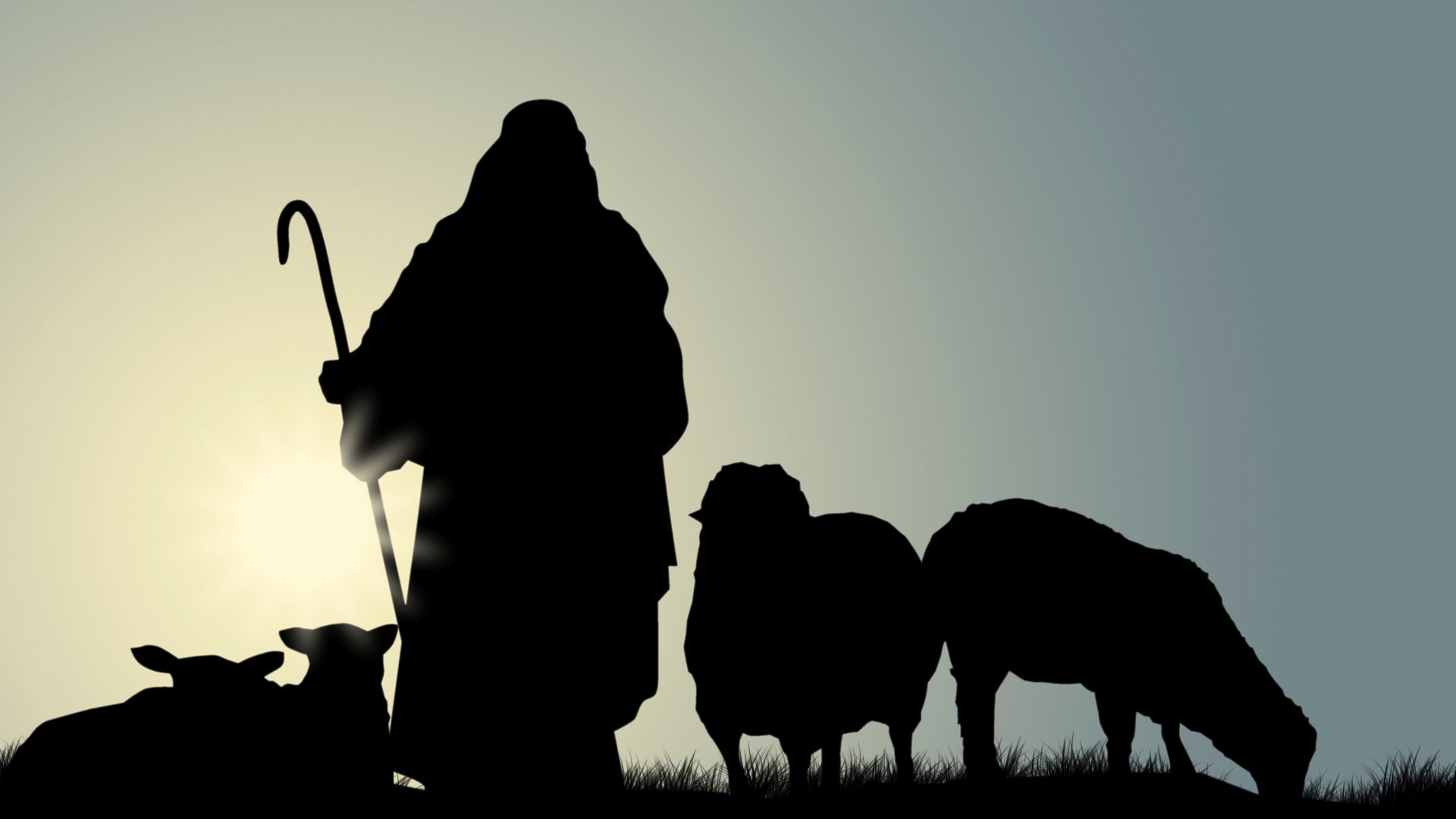
This whole week, I haven’t been able to stop thinking about a story Jesus told that fits almost too perfectly with the story of the shepherds on that first Christmas night. It’s found in Luke 15. Jesus said,
“What man of you, having a hundred sheep, if he has lost one of them, does not leave the ninety-nine in the open country, and go after the one that is lost, until he finds it?” (Luke 15:4)
If you’ve ever paused long enough to picture that scene, it should feel a little reckless. A shepherd leaving the ninety-nine behind. Walking off into the dark. Searching through ravines and shadows. Risking the whole flock for the one.
It hit me that this is exactly what the shepherds did on Christmas night. When the angels appeared, the shepherds didn’t stay safely in the fields. They didn’t reason it away. They left their flocks, left the ninety-nine, to go find the One. They stepped into the dark and walked toward a promise. Toward a manger. Toward hope.
However, Jesus’ parable goes even deeper because in Luke 15, Jesus isn’t talking about shepherds like them. He’s talking about Himself. In the parable, Jesus is the Shepherd who leaves heaven’s safety to come after the one who is lost. And the one? That’s you. That’s me. Do you see it? Christmas is not just the story of shepherds going to find Jesus; it’s the story of Jesus coming to find us.
And when the shepherd in Jesus’ story finds the lost sheep, He doesn’t scold it. He doesn’t shame it. He lifts it onto His shoulders and rejoices. “Rejoice with me,” He says, “for I have found my sheep that was lost.” Now listen again to the shepherds’ response in Luke 2: “They returned, glorifying and praising God for all they had heard and seen.” (Luke 2:20) Rejoicing again.
The shepherd in Jesus’ parable rejoices because the lost one is finally on his shoulders. The shepherds in Bethlehem rejoice because the One who came to carry us has finally arrived. This is Christmas. Heaven’s joy spilling into earth. A God who goes after us until He finds us, in the darkness, the quiet, the pain, the shame, and the fear.
You are not just searching for God. You are being found. Merry Christmas.
Pastor Ryan Paulson

Rediscovering Wonder
“And all who heard it wondered at what the shepherds told them.” (Luke 2:18, ESV)
As I was contemplating the Christmas story recently, this small line tucked into Luke’s Gospel caught my attention. They wondered. They marveled. Their hearts were soft enough and open enough to be amazed.
I sometimes worry that we’re losing that.
We live in a world where almost nothing is mysterious anymore. If we have a question, we don’t sit with it; we Google it. If we feel curious, we don’t ponder; we ask ChatGPT. If something confuses us, we find a YouTube video explanation in seconds. The entire Internet lives in our pocket, ready to give us the instant gratification of knowledge whenever we summon it. And while that can be helpful at times, it comes with a cost: We rarely wonder anymore.
Wonder requires slowing down long enough to feel astonished. It needs a heart that hasn’t been numbed by busyness or hardened by cynicism. These people in Bethlehem had hearts like this. When the smelly, unpolished shepherds showed up with unbelievable news, they didn’t scoff or shrug. They didn’t demand proof or ask for credentials. They didn’t get distracted. They simply wondered.
In a world surrounded by movement, screens, and constant noise, it’s difficult to marvel. It’s hard to be amazed when everything can be explained with a few clicks. And to be honest, it’s hard to be wowed by God when the small spark of wonder gets buried beneath notifications.
But, for a follower of Jesus, wonder is a part of how faith grows. Wonder is the step that leads to worship. Before obedience takes shape, amazement often opens the door. I think this is what God wants to restore in us when He invites us to develop a childlike faith — the ability to be moved and be surprised by His grace and love.
This Christmas, maybe the invitation is simple — slow down long enough to marvel again. Step outside and look at the stars like the shepherds did (remember, those are the same stars that they looked at!). Sit in silence for a few minutes. Notice something beautiful. Let yourself be astonished by grace, by the joy of a child, by the God who still steps into ordinary places with extraordinary love.
Merry Christmas!
Josh Rose
Family Pastor


Walk by Faith
Dark nights,
Seemingly never ending,
But glorious voices are singing!
“A Savior has been born!” (Luke 2:10-12)
Do we dare believe?
Will we step out in faith?
Will we go and look for this King?
Will we seek Him?
He is seeking you. (Luke 19:10)
When we feel forgotten, the Creator of the universe sends angels to deliver the most
important news to us. (Luke 2:9)
Now He is calling to step out into the unknown.
But He is there. (Joshua 1:9)
And He is holding out His hand. (Isaiah 41:10)
He sees your fear.
He hears your doubts.
And He leans in even closer.
His arms embrace you even tighter. (1 Peter 5:7)
Here, He reminds you of His love for you.
He reminds you, His love has set you free.
Free from fear, doubt, the past. (John 8:36)
Do you trust Him?
He has given you hope and a future. (Jer. 29:11)
Will you let Him guide you into that future?
Will you let Him take you by the hand?
Stepping into the unfamiliar is scary.
But He doesn't call you to walk alone. (Deut. 31:6)
He has made you to walk with Him. (Micah 6:8)
Your hands, He made to hold His.
Your feet, He made to follow His steps.
Your heart, He made you to trust in Him.
Do you trust in His love for you?
He conquered sin.
He conquered darkness.
He conquered death to give you life. (2 Cor. 5:15)
Will you let Him lead the way?
Stepping into new territory on our own invites our fears to never cease.
Stepping into new territory with Him invites our faith in Him to deepen–
Faith in His strength, His love, His promises. (Hebrews 11:1)
When we can’t feel Him near, will we walk by faith and not by sight?
Will we cling to His promises tighter than our feelings?
Will we turn to Him for strength instead of relying on our own?
He will never leave you. (Deut. 31:8)
Ahead is dark,
But our Heavenly Father is eager to show us the way. (Psalms 32:8)
Can we let His loving hand lead us?
As you walk, He is right there beside you, holding you close. (Isaiah 43:2)
When you can’t take another step, He will take you into His loving arms and carry you. (Isaiah 40:11)
He will never let you go.
Caroline Chaiban
