

Searching For Home
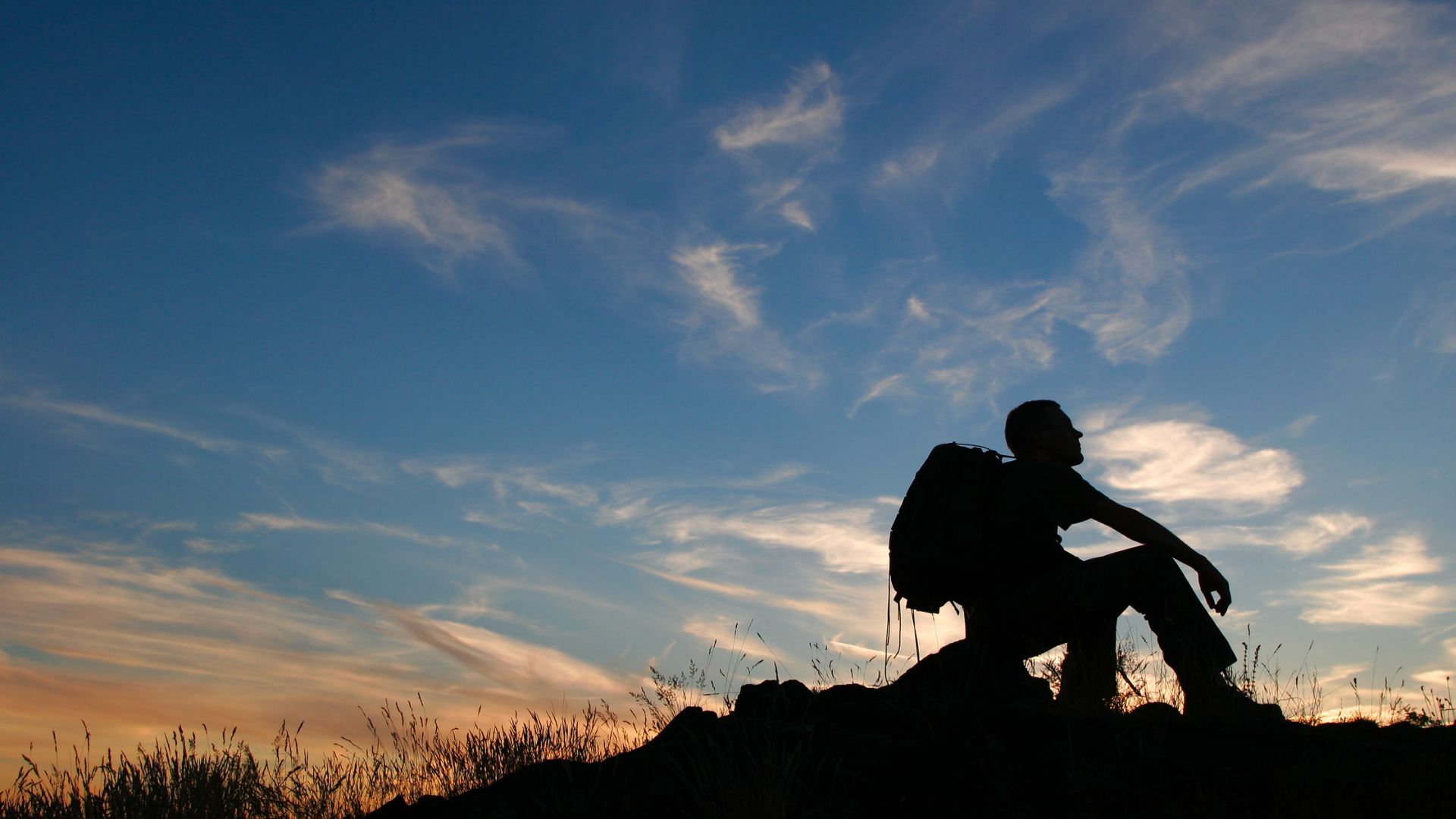
A few years ago, I read a book entitled Searching for Home by Craig Barnes. In it, he made the provocative point, “The ache for home is the ache for God.” That idea came back to me as I was reading Revelation 21. Most of us carry a quiet ache for home. Not just a roof over our head or a house in a certain zip code, but a place where we’re known, where we don’t have to perform, where we can finally relax. We long for a place where we can just be - it seems that’s what we mean by home. In fact, one of the best compliments you can pay a person is to say that they “made the house a home” - because we all know there is a difference.
Revelation 21 is about that innate longing for home. John records his vision by writing,
9 Then came one of the seven angels who had the seven bowls full of the seven last plagues and spoke to me, saying, “Come, I will show you the Bride, the wife of the Lamb.” (Revelation 21:9)
So we initially expect to see a bride. Maybe even the bride of Christ. However, when John looks, that’s not what he sees.
10 And he carried me away in the Spirit to a great, high mountain, and showed me the holy city Jerusalem coming down out of heaven from God. (Revelation 21:10)
He’s told he’s going to see a bride, but then he sees a city. He sees his eternal home. At first, that feels a little confusing. But the longer you sit with it, the more beautiful it becomes.
What makes a city what it is? The people. Their shared life. Their stories overlap. Their lives tangled together over time. And in the same way, what makes a home a home isn’t the walls, it’s who’s there with you. One of the distinctives of the new Jerusalem is that it’s a place, that it’s not a collection of individuals in proximity; it’s people connected in community.
This vision tells us something important about where the story is headed. God’s future isn’t just you and Jesus. It’s you, Jesus, and a community of people who are fully healed, fully connected, finally at peace. The bride speaks of intimacy. Being chosen. Being loved. The city speaks to community. Belonging. Shared life. It’s both. Deeply personal and beautifully collective.
And honestly, that hits a nerve for me. We live in a world where people are more mobile than ever and more lonely than ever. We move often. We stay guarded. We keep relationships light because deep connection feels risky or exhausting. Even in church, it’s possible to sit in a room full of people and still feel unknown.
But God’s picture of the future says: this won’t always be true.
New Creation is a place big enough to hold millions without losing intimacy. There’s room for you, and there’s a purpose for you. You won’t disappear into the crowd, and you won’t have to protect yourself anymore. Love becomes shared life. Intimacy grows into community. Covenant turns into culture.
And here’s the invitation for today: if this is where we’re headed, then this is what God is forming in us now. Every step toward vulnerability, every act of forgiveness, every risk of showing up for others is a step closer to home.
You’re not just waiting for eternity. Eternity is shaping you and teaching you how to be at home right now, today.
Pastor Ryan Paulson


A Place to Call Home
Series: ALL THINGS NEW: Revelation Season 5
Text: Revelation 21:9-27
Speaker: Ryan Paulson, Lead Pastor
January 11, 2026: On Sunday, Lead Pastor Ryan Paulson continued All Things New, Season 5 of our recent sermon series from the book of Revelation. This will be the final section of the book. Our sermon message is entitled “A Place to Call Home.”


Complex Identity
In Revelation 21:5-8, from His throne, the Almighty tells John to write down these words specifically.
“It is done. I am the Alpha and the Omega, the Beginning and the End. To the thirsty I will give water without cost from the spring of the water of life. Those who are victorious will inherit all this, and I will be their God and they will be my children. But the cowardly, the unbelieving, the vile, the murderers, the sexually immoral, those who practice magic arts, the idolaters and all liars—they will be consigned to the fiery lake of burning sulfur. This is the second death.”
I hold the opinion that these verses are God describing himself, telling us who he is. The second sentence starts with “I am,” and I think the rest of the selection elaborates on it.
He starts with his timelessness to bring his separateness from humanity into sharp focus. He is the beginning and the end! Simply put, He is utterly HOLY. Profoundly set apart, yet He will elevate the needy to Himself… for free! His grace brings the needy into his very family, calling us his children. The idea that the most holy would adopt the most unholy is a paradox for the ages. We therefore conclude that He is generosity itself.
Then we see what He hates, the things He deems to be literally worthy of hell. These are things we will be the opposite of. We will be courageous and bold, we’ll be noble defenders, chaste and true, wholly devoted to God, and entirely trustworthy. To me, this sounds hauntingly familiar; it’s like a collection of all the wonderful, unrealistic ideals I ever daydreamed about as a kid. We will be made new as complete, holy, and pure versions of ourselves. Redeemed!
Our Father hates evil and loves us. We have evil natures and do evil, but He loves us far more. We have been washed by the blood of Christ and claimed by the Spirit. So now, when God rails against hell-worthy attributes that we may presently exhibit, we can rail against our own sin with Him, agreeing that it is indeed hell-bound, all the while knowing we are secure and in no danger. We’ll be made into who we’ve always been meant to be: His children.
Jonathan Duncan
EFCC Member


All Things New!
Then I saw “a new heaven and a new earth,” for the first heaven and the first earth had passed away…. “Behold, I am making all things new.” (Revelation 21:1&5)
When we hear the words “new heaven” and “new earth,” it’s easy to imagine a total replacement of the heaven and earth that God created in Genesis 1. Many people assume there will be a cosmic demolition followed by a divine rebuild, but that picture depends on a misunderstanding of the word “new.”
In Revelation 21, the word used for “new” is the Greek word kainos. It doesn’t mean new in time (that would be neos), but new in quality. The idea is one of being renewed, transformed, or made better than it was before. This is a very important distinction!
If God were simply making a neos world, then the one that we live, work, play, and love in today would be disposable. We would have no great reason to care for creation, culture, or even our own bodies if it’s all headed for the burn pile. That version of the story subtly teaches us to disengage, to endure the present while waiting for the big escape of death or Jesus’ return.
But Revelation tells us a very different story.
When Jesus says, “Behold, I am making all things new,” he is not suggesting that everything will be replaced. He is promising us that it will all be redeemed! He doesn’t abandon what is broken; he restores it. Just as Jesus didn’t discard his scarred body after the resurrection, Jesus has no intention of throwing away his creation. Just like his body was raised in glory, so too will the heavens and the earth. He will heal it, make it better, and make it new.
Notice the tense: “I am making all things new.” Not “I will someday make things new.” God’s work of renewal has already begun, and the evidence of that is the new creation that each of you has become (see 2 Corinthians 5:17). The future of creation is not destruction, but resurrection.
This means that the world we live in now matters. The work you do, the relationships you nurture, and the care you show for people and places will not be wasted. These are not temporary distractions while we wait for heaven. They are seeds of the kingdom that Jesus inaugurated.
The hope of Revelation 21 is not that God will rescue us from the world, but that he will come to dwell with us in it. Heaven doesn’t replace earth; it renews it.
And if that is where the story is going, then how we live now becomes an act of hope. Every small act of faithfulness becomes a quiet declaration: God is not done yet. He is making all things new.
Josh Rose
Family Pastor


When ‘The Cave’ Is No More
In my opinion, one of the most provocative images crafted by a philosopher is Plato’s Allegory of the Cave. It’s my favorite portion of text to teach high schoolers because it completely shatters the world they think they know. But it also invites the wonder-filled and the bright-eyed, those hungry for more, to dream of an existence that surpasses the best they’ve imagined.
In his image, Plato begins by showing us prisoners bound in a cave. This cave is all the prisoners have ever known, and all they can see in front of them are shadows of distorted physical objects and creatures, never getting to see the source of the shadows themselves, let alone anything outside. These shadows are the prisoners’ whole world–a sad, pitiful, and miserable existence (though, of course, they have no idea just how miserable because they’ve never known anything else).
One day, a prisoner is released and dragged out of the Cave. The man who released him tries to show him the source of the shadows, eventually forcing him into the sunlight and the glorious outdoors. At first, the prisoner is in agony from being exposed to the sun’s light, but as his eyes adjust, he is increasingly blown away by the world unfolding before him. Until he was able to see it with his own eyes, he never could have imagined how beautiful the world could be, nor anticipate the extent to which the goodness of it would take his breath away.
Sometimes I ask my students to imagine a world without sin, evil and wickedness. What if everyone were perfect in their loving and their goodness and never acted selfishly? What if there were no more suffering or hardship or struggle or death?
Inevitably, the students struggle with this thought project. Even if they manage to do so, the result is a pretty boring picture. But this doesn’t surprise me one bit. Why?
Because none of us has ever ‘left the Cave.’
The best things we can possibly imagine are still mere shadows compared with the love, freedom, fulfillment, peace, beauty and goodness that lie in wait for us when the shackles of death are removed from this world and we get to see the gloriously restored and renewed creation as it was always meant to be.
Isn’t it delightful to consider that we can’t even fathom how glorious the new heaven and new earth will be? Any expectations I can have about it will be shattered in the best way possible. I don’t know about you, but I can’t wait to have my breath taken away.
Ashley Carr
Teacher


Emmanuel
And I heard a loud voice from the throne saying, “Behold, the dwelling place of God is with man. He will dwell with them, and they will be his people, and God himself will be with them as their God. He will wipe away every tear from their eyes, and death shall be no more, neither shall there be mourning, nor crying, nor pain anymore, for the former things have passed away.” (Revelation 21:3-4)
I remember moving into my first apartment with my roommate, Hannah, a few years ago. Living with Hannah was totally different than living with my family. I worked 45 minutes away, and we both studied at home most of the time. Though we lived together, we didn’t see one another all that often. My favorite memories in that apartment with Hannah were the nights that we’d sit on the kitchen counters with only the light above the stove on. We would talk like that for hours. It was on those nights that we spent the most quality time together. Living in that apartment showed me that even though we shared a physical space, we were still very separate people.
This passage calls back to a very familiar scene in Exodus, the construction of the tabernacle. The place where God would dwell with His people on Earth. This tabernacle and, eventually, the temple were the designated place to meet with God. These verses not only reflect the indwelling of the Holy Spirit and Christ in the flesh among man, but also point us to a future reality in which God and man exist in the same space.
What strikes me about this in particular is the result of His dwelling. He will wipe every tear from our eyes, and pain and death will be gone. The Lord does not just merely occupy the same space, but His presence transforms everything.
God is not just like a roommate. The distance between Him and us will disappear. The depth of His presence is one that we will only understand when it arrives. May the promise of communion with the Father bring you peace and hope for the future to come.
Kassie Lowe
Young Adults Lead


Heaven on a New Earth
I was shocked to learn that the eternal home of believers, our heaven, will not be in the heavens or the sky. It will be on Earth. Not this Earth, but an earth, the “New Earth.”
So much of what culture envisions as heaven, wings and halos, clouds & harps, heaven as a place that is ethereal and up high, is not what the Bible portrays for Christians in their eternal home. Instead, Revelation 21 describes a vivid picture of a new home on a new earth.
Then I saw a new heaven and a new earth, for the first heaven and the first earth had passed away, and the sea was no more. And I saw the holy city, new Jerusalem, coming down out of heaven from God, prepared as a bride adorned for her husband. And I heard a loud voice from the throne saying, “Behold, the dwelling place of God is with man. He will dwell with them, and they will be his people, and God himself will be with them as their God.” (Rev. 21:1-3)
When this passage describes a new “heaven,” it means the sky and the space above the sky. When it describes a new “earth,” it refers to the place where believers will live with each other and God. Heaven will be on a new earth. Our eternal dwelling place will be on a new planet with a specially made new city.
That new place is an amazing new city on an amazing new earth. Consider these dimensions for a moment. A description continues of the new city in verse 16. This city is bigger than anything humans have ever created. It is 1,400 miles wide and long. The distance from San Diego, CA, to Wichita, KS, is 1,400 miles. It is also that high. The International Space Station orbits planet Earth at approximately 250 miles above the planet. So, a city that is 1,400 miles into the sky must be on a planet that is even more enormous just to have an atmosphere up there. That means the gravity will be much stronger, and the air pressure at the base of the city will be much higher than what we are used to. Therefore, our new bodies will most likely be much stronger in many ways. Spend some time imagining the future in glory and thanking God for what he is preparing for us.
John Riley
Junior High Pastor


Happy New (Year) World
Series: ALL THINGS NEW: Revelation Season 5
Text: Revelation 21:1-8
Speaker: Ryan Paulson, Lead Pastor
January 4, 2026: On Sunday, Lead Pastor Ryan Paulson began All Things New, Season 5 of our recent sermon series from the book of Revelation. This will be the final section of the book. Our sermon message is entitled “Happy New Year World.”