


The Master Gardener
Many years ago, when I was a little girl, my mother shared with me her love for the famous hymn “In The Garden.” It is a timeless hymn about Jesus walking in the garden with someone. The famous refrain, “He walks with me and he talks with me and he tells me I am his own, and the joy we share as we tarry there no one has ever known.” Watching my mom’s face as she sang this song afforded me the ability to think of Jesus walking and talking with my mother and that they were friends. At a young age, I saw this friendship and I wanted it.
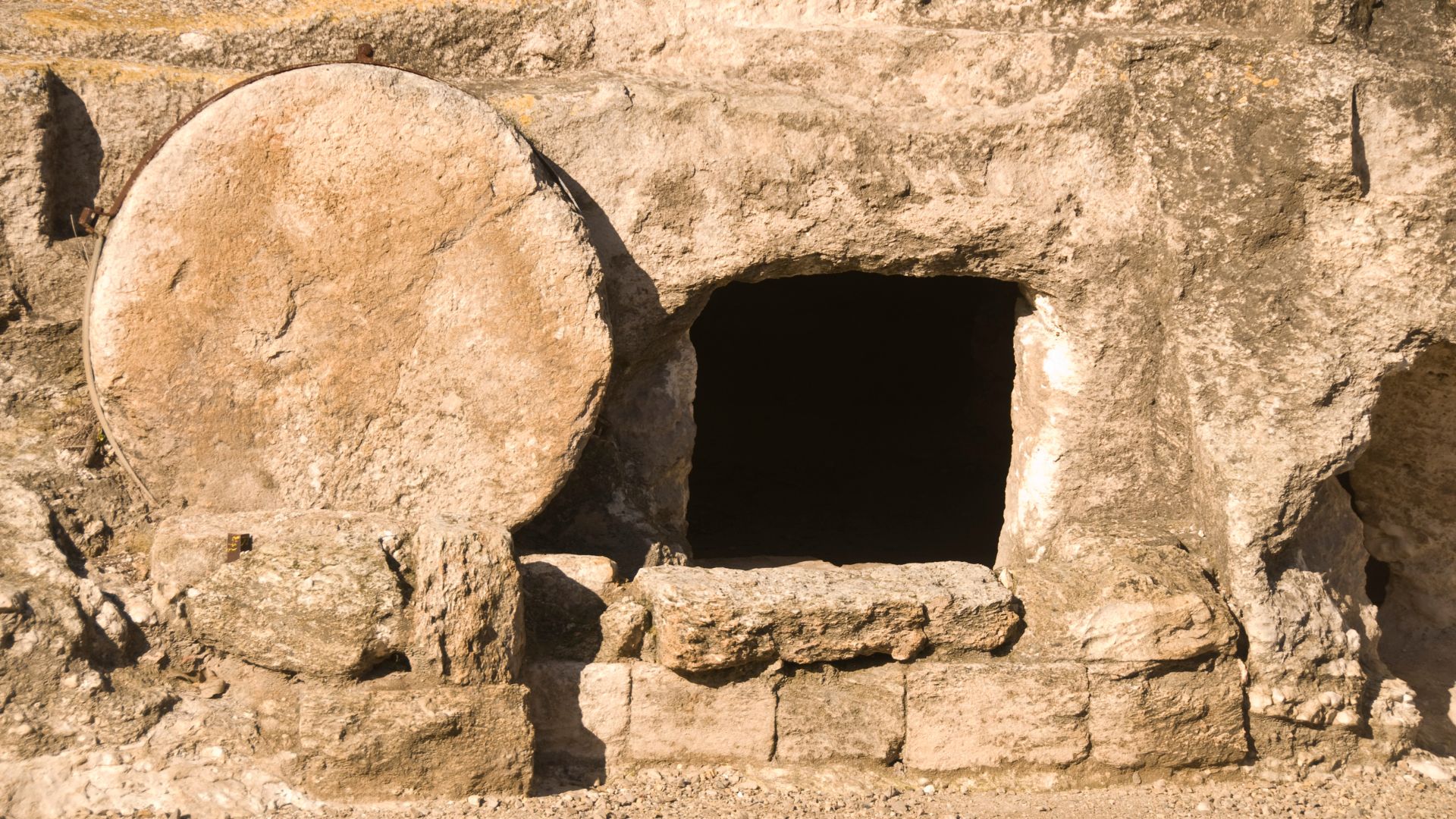
I recently learned the background of this song. It was written about John 20, as Mary comes to the tomb to look for Jesus. At first, she thinks he is the gardener who has carried Jesus’ body away. She asks “this gardener” for the location of the body so she can go get Jesus. She completely doesn’t recognize the sound of his voice.
He responds by calling her name, “Mary.” “Rabboni!” she reverently exclaims as she then recognizes him. She actually is calling him “My Teacher.” In fact, the NIV Study Bible goes on to say that John was making it clear she was addressing Jesus as God. Could you imagine the emotions she was feeling as she saw him standing there? My guess would be a combined feeling of disbelief and sheer joy at his appearance.
It’s interesting that, back in Genesis, the creation story unfolds in a garden and God was interacting with Adam and Eve. After the fall, when they heard God walking in the garden, they hid in shame. Neil Anderson phrases it as “... the immediate emotional experience of being separated from God was fear.” The NIV Study Bible states that “... the garden was once a place of joy and fellowship with God, was now a place of hiding from God.”
This is quite the opposite scenario as Mary turns toward Jesus at the sound of his voice, particularly when he calls her by name. Mary went looking to find her Lord and responded to the sound of his voice when He did call her name. There are several times throughout the passage where it mentions that “she saw” and describes her posture as turning toward Jesus. Isn’t that something that we all long for? To hear him say our name? To know we are seen by him? To know that “We are his own.”
God’s Word speaks often of planting, weeding, plowing, pruning, fertilizing, sowing, reaping, and growing, to use a few “gardening” words. There are parables, psalms, and numerous Scriptures that teach us in detail how these words apply to our own lives. Mary’s initial thought about Jesus actually is true. He IS the Gardener! May we, too, tarry in His presence.
Tammy de Armas
EFCC Member


Women Heralds
John’s account of the resurrection is my favorite. I love its personal nature. I love that John points out three times that he beat Peter in a footrace to the tomb. I love the tenderness in Jesus’ words. I love the spotlight John puts on Mary. It’s fascinating to me that Mary got to the tomb first. After not finding a body, she went and told the disciples what she had seen. Peter and John raced to the tomb to validate Mary’s story. After seeing she was telling the truth, they left and Mary found herself at the tomb heartbroken and alone.
Jesus was present, but unrecognized by Mary until this sacred moment.
16 Jesus said to her, “Mary.” She turned toward him and cried out in Aramaic, “Rabboni!” (which means “Teacher”). 17 Jesus said, “Do not hold on to me, for I have not yet ascended to the Father. Go instead to my brothers and tell them, ‘I am ascending to my Father and your Father, to my God and your God.’” 18 Mary Magdalene went to the disciples with the news: “I have seen the Lord!” And she told them that he had said these things to her. (John 20:16-18)
Jesus commanded Mary to go and tell the brothers what she had seen. Could Jesus have revealed himself to Peter and John who were just at the tomb? Absolutely. But he chose to appear to Mary.
Why in the world would Jesus choose to appear to Mary instead of Peter and John? We don’t know for sure, but we do know that having a woman as the first witness to the resurrection was not a benefit to the validity of the message. Celsus, a 2nd-century Greek philosopher captured the sentiment when he wrote, “Christianity can't be true because the written accounts of the resurrection are based on the testimony of women. We all know women are hysterical.” We all know women are hysterical. Wow! Now, we might conclude that Celsus’ comments are a bit extreme, but they capture the prevailing thought of his day nonetheless. Women weren’t even allowed to give testimony in a court of law because they were deemed unreliable witnesses.
In a garden tomb, Jesus is bringing about new life, but he’s also healing divisions and inequalities that human beings often create. He’s embedding within this new resurrected world the call to listen to and value women — something that wasn’t practiced in Jesus’ day. By entrusting women with the most important message of all time, Jesus gave them back their voices; voices that had been and often still are silenced. However, as Jesus’ followers, we have recorded for us in Holy Scripture the truth that it was a woman’s voice that first told the other disciples, “He is risen!” The fact that women were called to first carry the message of resurrection is a message in and of itself.
How does that message sit with you today?
Pastor Ryan Paulson


Static Cling
What do you think of when you hear the word “cling”? Maybe that random sock that sneakily ends up stuck to your sweater due to static. Or perhaps you think of a clingy person who depends on and attaches themselves to someone maybe just a little too much. These descriptions have a negative connotation, but Mary Magdalene was clingy in a good way! She had become dependent on Jesus and clung to Him for life. In doing so, she learned to trust and rely on the One who had freed her from demons, taught her as a disciple, and showed her a new way to live.
Jesus, too, could rely on her presence as she had stood at His feet weeping as His life drained out. This undoubtedly was the worst of days for Mary! Engulfed with grief and sadness, she had gone to the tomb to find His body missing which only deepened the heartache and sense of loss. Jesus understood her pain and came to her — very much alive! What a roller coaster of emotions!
Upon recognition, her very natural response was to cling and never let go! After all, she had already lost him once! But Jesus urged her to embrace this separation saying, “Do not cling to me” (John 20:17). The way she was used to clinging would not remain static but require change. It would require the Holy Spirit. She and all other disciples from then on (including you and me) would need to learn to cling to the sound of His voice, trusting that one day we will have the full embrace of God’s presence.
Are you clingy in a good way? I hope so…
Jessica Klootwyk
Group & Women’s Discipleship Director


Messages in the Details
In reading the Scriptures, often we miss the details and don’t realize there is more to unpack. Here are some instances in the passage from John 20:1-18, the story of the resurrection of Jesus.
Who wins the race? John proved to be faster than Peter as he mentioned beating him to the tomb three times. Is there any deeper meaning to this? I don’t know, but perhaps detailing it brings us to see a very human response.
Why the emphasis on Mary Magdalene? We know that a woman as a witness in the Bible times (and even in the Middle East today) was not considered to be a valid witness. Yet, the LORD revealed Himself to her first, even though He could have revealed Himself to John and Peter. Mary was the first one who could say “I have seen the LORD!” She was the first person in all of history to be able to tell others that Jesus is alive. Jesus clearly elevated the status of women.
What about the “folded cloth”? There is specific detail in this Scripture passage. After Peter went into the tomb, “... He saw the strips of linen lying there, as well as the burial cloth that had been around Jesus’ head. The cloth was folded up by itself, separated from the linen” (John 20:6-7). This is a very specific detail. A grave robber would not have stopped to nicely fold up the face cloth. Did Jesus fold the cloth Himself? Is there a significance to it being folded? We don’t know for certain but perhaps it’s a message or promise to us. In some cultures, if a guest must leave the dinner table, how he leaves the cloth says whether or not he is returning. One thrown down says, “I’m leaving.” But a folded cloth says, “I’m returning.” Is this the promise of the folded cloth? I like to think so.
When you study the Scriptures, spend time looking for the details and ask yourself questions. Why is that important? What does that detail signify? Why does God want me to notice this? The richness of the Scriptures is a mine that will never be fully excavated, and nuggets can always be found.
Read through John 20:1-18 slowly. Ask the LORD to show you details you may have missed before even though you may have read this marvelous passage many times. Share what you have noticed and bless others!
Francie Overstreet
EFCC Member

Why Wait?
“Jesus traveled about from one town and village to another, proclaiming the good news of the kingdom of God. The Twelve were with him, and also some women who had been cured of evil spirits and diseases: Mary (called Magdalene) from whom seven demons had come out…” Luke 8:1-2
Mary was a Jewish woman from the fishing town Magdala on the western shore of the Sea of Galilee. The healing of seven demons from Mary’s life is recorded in Mark and Luke. Imagine the shame of being linked to physical or psychological illness as a cause of demon possession. Mary’s exorcism(s) received little attention but resulted in not only her healing but also her undying devotion to Jesus, her Rabbi and teacher. It is widely accepted among secular historians that, like Jesus, Mary Magdalene was a real historical figure and reportedly was one of the women who supported Jesus’ ministry financially. She always appears first whenever “a group of women” is listed in the Synoptic Gospels and as such is seen as the most important in that special group.
Looking closer in John 20, “Now on the first day of the week, Mary Magdalene came to the tomb early, while it was still dark, and saw that the stone had been taken away from the tomb. So she ran and went to Simon Peter and the other disciple, the one whom Jesus loved, and said to them, ‘They have taken the Lord out of the tomb, and we do not know where they have laid him.’” And later in verse 10, “Then the disciples went back to their homes.”
Mary was the first to visit the tomb and see the stone rolled away. She “ran” to tell the disciples, and they “ran” to see for themselves because in those days men, (even apostles), didn’t fully trust women (Luke 24:11). John believed that Jesus was alive when he saw “the evidence,” but John 20:9 reveals the disciples didn’t have a full understanding of Jesus' death and resurrection.
Mary Magdalene’s heart broke as she witnessed her Lord, beaten, tortured, bleeding, and carrying a heavy cross through the streets of Jerusalem while people yelled “Kill him.” Then he was nailed to that cross and tortured more before finally saying “Father, forgive them for they know not what they do.” She and Jesus’ mother Mary were witnesses to the worst crime in human history, and the unjust killing of the one they loved. I’m sure she was emotionally and physically drained after the crucifixion, but she was driven on by her devotion to finding Jesus.
Now, his body is missing and her fractured heart is broken again. (Can you imagine the excruciating pain?) Suddenly “the man” standing behind Mary in the tomb speaks her name — and she knows he is her beloved Rabboni (teacher)! What if she had left the tomb with the disciples? Why did she stay behind?
Remember, she didn’t walk to the tomb, she ran! She didn’t walk to tell the disciples he was gone, she ran! She didn’t go home to sleep, she waited and wept at the tomb. Waiting resulted in her being the first to see and recognize the resurrected Savior when he called her by name. What joy she must have felt as she ran to tell the other disciples the news. What a great honor!
Prayer: Jesus, please help us to wait patiently for your voice that calls us by name. May we always seek your face, experience your loving presence, and share the Good News.
Deb Hill
Exec. Assistant to Pastor Paulson


The Travesty of the Gospel
- John 18:38-40
Pilate is in a bind here. He knows that Jesus should not be killed, and he even announces Jesus’ lack of guilt to the people. But then, in a not-so-clever attempt to salvage the situation, he ends up making things worse. Pilate brings up a “custom” that he had probably made up himself earlier in his reign. This custom reeks of political theater. It is a ruler who is trying to look generous and magnanimous but ends up looking like an aloof dictator. At some point, Pilate must have realized that the Passover commemorated an act of grace shown to the Jewish people by Yahweh, their God. So, Pilate’s thinking must have been something like this… “I know! I’ll be gracious just like their ‘god.’ I’ll let them choose a prisoner (one of their own people) that I have ordered to be executed (probably for an act of rebellion against him, not against them), and they will see that I too am gracious.”
In this feigned act of graciousness, Pilate must have thought something like: “I’ll declare Jesus not guilty and then mock Jesus publicly by putting a robe on him and calling him ‘the King of the Jews.’ Then they’ll see that he is harmless.” The only problem is that what Pilate thought was mockery was more like rubbing salt in the wound. This was a bigger deal to the Jews than Pilate ever realized. This of course would be something that he would have understood if ever took even the slightest interest in the people that he was put in charge of. However, Pilate didn’t realize that claiming to be “King of the Jews” was not just a silly mistake, it was blasphemy. Only God’s anointed, only the Messiah, could do that. So, to Pilate’s surprise (ignorant as he was), the Jews do the exact opposite of what he wanted them to do and ask him to release a thief so that an innocent man could be killed.
But I find it interesting that God uses both the obstinate adherence to religious tradition by the Jews and the ignorant whims of an out-of-touch tyrant. All of this works together to ensure that the guilty one is set free while the innocent one is killed on the cross. This is an absolute travesty! But it is also THE GOSPEL! Without this travesty of injustice which was caused by this unholy union of government and religion, there would be no gospel at all. The good news is that our hope is not in either the power of religion or the power of the state, but in the power of the grace of God as revealed in Jesus. This is what makes today such a “Good” Friday!
Josh Rose
Discipleship Pastor


Truth Personified
Clothes make a statement and can tell you a little something about the wearer. They serve a purpose. Jesus, who has often been referred to as “God in skin,” had a purpose and that was to “bear witness to the truth” (John 18:37, ESV) and his favorite “outfit” was love. He showed us that humanity was made to love God and to love others — His whole life demonstrated this truth.
What is truth? Pilate asked this question of Jesus as he used his intellectual prowess to attempt to understand or possibly mock Jesus. Truth personified was standing right in front of him, making Himself known as He lived out a new way to rule and reign over the land. This way was completely foreign to Pilate because it was the way of God’s kingdom — a land that is not of this world. This was completely natural because as Paul recorded in the letter to the Corinthians, “The natural person does not accept the things of the Spirit of God, for they are folly to him, and he is not able to understand them because they are spiritually discerned” (1 Corinthians 2:14).
Pilate, though human, lacked wisdom that can only come from the Spirit of God. Jesus, the embodiment of wisdom, showed us how to be perfectly human. He bore witness to love by not only holding all things together, but putting them back together through His actions — His birth, His life, His death, His resurrection, and His ascension. Jesus made it possible for humanity to once again be the bearers of God’s image unmarred by the wound of sin, but completely whole, healed, and restored. Now that’s a statement that's worth repeating! So let’s “put on love” and bear witness to Jesus being the way to being whole, healed, and restored! I pray today that the person of the Holy Spirit has prepared your heart to hear love, see love, and accept love from the God who made you human.
Jessica Klootwyk
Group & Women’s Discipleship Director

What Is Truth?
A trauma recovery program produced by the nationwide ministry Reboot Recovery quotes an intriguing statement by 20th-century Indian philosopher, Sathya Sai Baba, who said: “You are not one person, but three: The one you think you are; the one others think you are; the one you really are.” We could debate this concept at length. Pontius Pilate pondered a similar set of questions when Jesus of Nazareth was brought before him on capital punishment charges by the Jewish rulers. It was an unprecedented encounter; the unwary Roman Governor of Judea face to face with Israel’s long-awaited “Messiah.” Pilate must have wondered — who is this rabbi that stirs up such intense hatred by the Jewish rulers? Perplexed by the case, Pilate posed searching questions; “Are You the King of the Jews?” (John 18:33), and “What have you done?” (John 18:35) Pontius Pilate had no idea the person standing before him was both fully man and fully God. Jesus is the only truly perfect human being and the only fully actualized person to ever walk upon the earth. Pilate had no clue that the man standing before him in judgment would one day return as King of Kings to judge the whole world!
Jesus raised the conversation to a higher plane when he told Pilate, “I have come into the world, that I should bear witness to the truth. Everyone who is of the truth hears My voice” (John 18:37, NKJV). Sadly, at this point, Pilate missed the opportunity of a lifetime. Jesus was inviting him to engage on a spiritual plane, but Pilate wouldn’t go there. He just responded, perhaps with cynicism, “What is truth?” Pilate wasn’t really looking for an answer. He was a pragmatist and used a philosophical diversion to avoid engaging with Jesus over spiritual truth claims.
Most people today also avoid discussing spiritual truth claims. Like Pilate, they may ask, “What is truth?” or “Is there such a thing as truth?” Our culture has lost its grasp of what truth is and where it can be found. The common view is “no one’s truth is any better than another’s” but that philosophy is a lie and it originates from the father of lies. There indeed is “truth” and God the Father sent his only begotten Son into the world to light our way to truth and eternal life. Jesus truly is the way, the truth and the life. May you and I do all we can to lead others to the true voice of Jesus.
Pastor Dave Korinek

Pilate’s Predicament
No. Not exactly. Jesus’ point in Matthew was that I should be very careful that I am not judging others too critically or harshly and at the same time excusing all kinds of sin, ignoring the evil in myself.
The fact is, I judge every day. You do too. With every choice that I make, every word that I speak, who or what I devote my time, energy and resources to, every decision I make involves judgment. Ultimately, my judgments reveal the true “god” of my life.
My judgments are typically unspoken, unnoticed by others, But as governor of Rome, Pilate’s judgment that day would be eyed by thousands and known for all of time. And his judgment would reveal the “god” of his life.
Pilate was in a predicament. When I read through each Gospel account of Pilate, I see a conflicted soul, caught in the crosshairs. Over and over and over again he wants to free Jesus, he tries to free Jesus, and he can find no legitimate charge against Jesus. He knows this man doesn’t deserve death. At one point in his time with Jesus, he asks him, “What is truth?” The only truth Pilate knows and trusts is power. But it’s a power that is earthly, uncertain, one that could easily slip through his fingers if he’s not careful. Deep down, this man with power is ruled by fear. Fear of what his peers would say, of who the religious leaders threatened to tell, of what Caesar could do.
Fear was Pilate’s master.
Fear annihilates faith.
A couple of decades after Pilate judges Jesus, the Apostle Paul pens these words to the church at Galatia. “Am I now trying to win the approval of men, or of God? Or am I trying to please men? If I were still trying to please men, I would not be a servant of Christ.”
Pilate judged the approval of powerful men more important than the life of an innocent man. He judged his palace and position as a better investment than his eternal future. He judged that pleasing the people was wise, wiser than following his conscience and doing the right thing for a righteous man.
Fellow servants of Christ, may we learn a lesson from Pilate’s predicament, and instead live fearlessly, for the approval of God.
Donielle Winter
EFCC Member


Donkey King
Jesus rode a donkey into Jerusalem, symbolizing his entrance as a king bringing peace. Donkeys have a reputation for stubbornness. They also have a cross of black fur or hair that grows across their shoulders and down their backs. There are legends about how they got that cross. Some say the center of the cross marks where Jesus' hands touched the donkey to get on. Others say the donkey followed Jesus to the crucifixion. Then, as it turned away from that horrible death, the shadow of the cross fell upon its back and marked it as humble and faithful.
Less than five days from the triumphal entry into Jerusalem, Jesus is brought before a donkey of a man. A man that would not see him as king, support his innocence, or acknowledge his kingdom, except in jest.
Pilate asked Jesus these three questions in John 18:33-38:
“Are you the king of the Jews?”
“What is it you have done?”
“What is truth?”
If Pilate actually wanted answers to those questions he could have acknowledged the truth Jesus gave in response, either at that time, or later after Jesus rose again:
“Is that your own idea, or did others talk to you about me?”
“My kingdom is not of this world. If it were, my servants would fight to prevent my arrest by the Jewish leaders. But now my kingdom is from another place.”
“You say that I am a king. In fact, the reason I was born and came into the world is to testify to the truth. Everyone on the side of truth listens to me.”
Jesus rode the first donkey into town and the praises of the people. Then, Jesus rode Pilate’s pronouncement of death to the cross. All people, Pilate included, will be marked by the cross of Christ, but sadly, not because of faith. The cross on the backs of donkeys is a beautiful thing and can be a poignant reminder of salvation. But ornamental crosses do not make believers, and for some, the cross will be a mark of disbelief. Will you listen to Jesus’ declaration of truth and stand under his kingdom rule?
Pastor John Riley
