


A Second Chance at Life
Decades ago, as a young college graduate, I accepted an internship in New York City. Unacquainted with potential dangers lurking in big cities, I unwittingly got cornered by a street gang wielding a switchblade. This crisis began when the gang grabbed my mother’s purse in a crowded public transit station and ran off. I naively chased them at a “safe distance” in hopes of retrieving any contents they might drop from her purse as they fled. It was not the wisest plan! Two blocks later I stared cautiously down a narrow, dead-end alley for any remnants from her purse. Without warning they jumped from the shadows and surrounded me. One of them pulled out a switchblade and headed straight at me with the blade extended. I had no defense and no route of escape. Time seemed to freeze. But at that instant, an NYPD patrol car screeched up to the alley and an officer jumped from the door. His sudden arrival put the gang to flight. They disappeared over dumpsters, up fire escapes, and through side doorways and windows. Amazingly, I was still standing and unharmed with only the police officer in sight!
Like many young people I never really considered the prospect of my own death. In fact, the reality of that near brush with death didn’t sink in until years later when I received Christ. Only then did I realize if not for God’s providential care, life might have ended in a pool of blood in a lonely alley. If not for that second chance at life, I would never have had the opportunity to receive Christ as my personal savior. I would never have become a father or known the joy of having grandchildren years later. I would not have had the privilege of eventually serving the Lord in ministry. Thinking back about my rescue that day, I can now see it figuratively as a “resurrection” – a new gift of life from the hand of God.
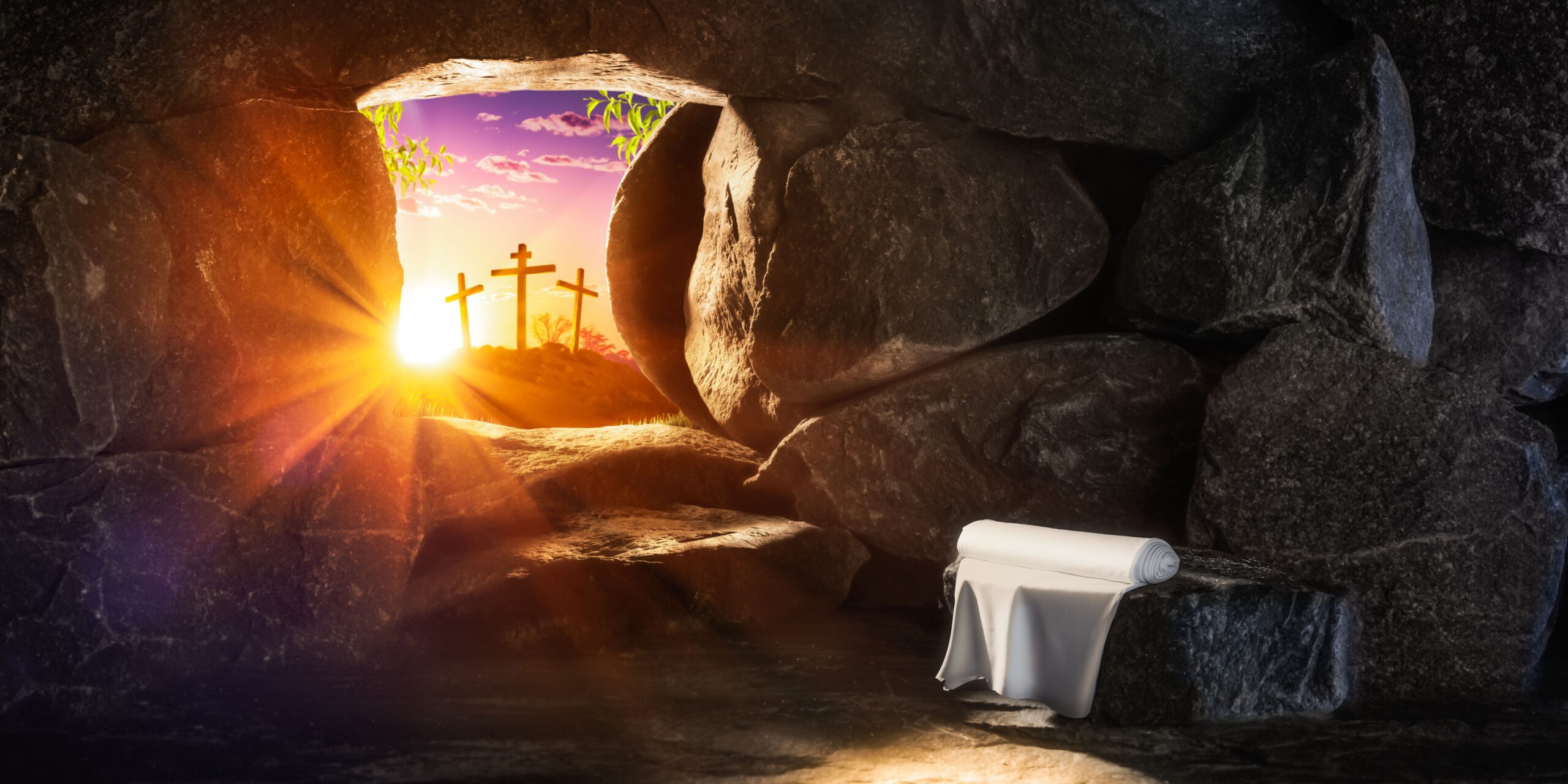
Over the years I’ve heard remarkable testimonies from others about second chances at life following a grave illness, serious accident, or other near brush with death. Such stories of temporal deliverance serve both as a witness to the providence of God as well as a foreshadowing of our coming resurrection unto eternal life. Our God is not only the giver of life, but also the redeemer of life and the power behind the coming resurrection unto eternal life. Resurrection is God’s sure and certain promise to every believer in Jesus Christ. His resurrection from a rock-cut grave near Jerusalem proves that God can fulfill that promise to every believer. To Him be the glory and the honor and the power, now and forever!
Dave Korinek


Reliance on the God Who Raises the Dead
In the passage in 2 Corinthians 1:8-11, we see a shift in focus that God
caused in Paul and those with him. The situation they were in was dire:
Paul said, “We were under great pressure, far beyond our ability to endure,
so that we despaired even of life. Indeed, in our hearts, we felt the
sentence of death. But this happened that we might not rely on ourselves
but on God, who raises the dead.” Did this surprising statement mean
they had not relied on God? I don’t think so but God wanted them to rely
on Him fully because of the power of resurrection. Often we don’t even
realize how self-reliant we are but God desires a focus shift in us as well.
We want to get out of a situation and He wants us to trust His power to
get us through it. Jesus showed us that.
In Gethsemane, Jesus was under great pressure; He knew death was close
and it would be more than anyone could endure. He asked Abba to take
the cup from Him but acquiesced to God’s purposeful will. He drank the
cup completely all the way to the release of His Spirit on the cross. He
knew intimately the agony of the cross but then the joy of resurrection
power over death. For us on this side of the cross and the gloriously
empty tomb, we choose and keep on choosing every day to rely on the
power and the meaning of the Resurrection.
EFCC has gone through being overwhelmed and under great pressure, too.
In July of 1971, the second pastor of Emmanuel Faith suddenly died of a
heart attack while on vacation in Canada. Pastor Coy Maret was greatly
loved during his 27 years of pastoring, teaching, loving, and ministering to
all ages. (I remember well how he spoke to the high schoolers who sat in
the front rows to hear him.) We were bereft and intensely sorrowful.
Knowing that God had a plan for EFCC, we would ‘keep on keeping on’ as
we relied on His direction and power. In July of 1972, one year later, Dr.
Richard Strauss answered the call to become the third pastor of Emmanuel
Faith. Later, there would be more times when God asked us to fully focus
on His power of Resurrection but those are stories for another time.
In reflection, do you remember times when you were more self-reliant than
God reliant even after becoming a believer? Do you have a story to share
of how God used your pressured time to cause you to fully rely on Him?
Do you think you might need a focus shift and a new perspective on God’s
power to resurrect?
Francie Overstreet


Is Pain a Gift?
We live in a fallen world and pain is a part of life. We come into this world because of labor pains, crying, and feeling the separation from a warm safe place into uncertainty. God allows pain in our lives for various reasons. Mark Batterson said sometimes the greatest joy follows the pain as mothers of newborns can attest. Noting gets our attention like pain.
We realize we have absolutely no control and the only one who does is the Lord as Paull talks about in 1 Cor.1:9, Indeed, we felt that we had received the sentence of death. But that was to make us rely not on ourselves but on God who raises the dead.
Pain saved my life in early 2011 when I woke up with excruciating abdominal pain that resulted in a trip to Urgent Care and the ER. I was diagnosed with pancreatitis which led to my gallbladder being removed, but what followed was the biggest shock of my life. The pathology report revealed a cancerous tumor in my gallbladder. That day began a journey of more surgery, chemotherapy, radiation, and years of follow-up CTs and bloodwork to make sure it hadn’t come back.
If I hadn’t had that painful pancreatitis, the gallbladder cancer wouldn’t have been found early enough to treat, as is often the case. God never allows pain without a purpose in the lives of His children. He always causes it to work together for our ultimate good of conforming us to be more like Jesus. (1 Cor. 1:3-4) The other good was that God began bringing people across my path on similar journeys and they became good friends. Greater empathy for others can be a result of pain and trials.
When pain brings us to the end of ourselves, God reveals himself and his power and love for us in a new way. It might not be physical pain, it might be emotional, the pain of loss, or mental pain. Whatever the burden or the pain, God desires to deliver us and give us His peace and hope. He wants to walk with us and even carry us on the journey.
The One who created us, the One who wept in the garden, the One who suffered death on the cross, and the One who conquered death, understands our pain and can use it to show us where we need to grow and reveal Himself to us in new ways.
Deb Hill

Living Hope
The word “inheritance” can bring about mixed emotions. For many, it means heartbreak because of the loss of a loved one. The physical inheritance may be nice, but it doesn’t replace the life that is now gone. Some inheritances can drastically change the way we live while others may offer minimal, if any impact. Peter gives us a different perspective on the potential life that an inheritance can offer. 1 Peter 1:3-4 says, “Blessed be the God and Father of our Lord Jesus Christ! According to his great mercy, he has caused us to be born again to a living hope through the resurrection of Jesus Christ from the dead, 4 to an inheritance that is imperishable, undefiled, and unfading, kept in heaven for you,” Human inheritance is temporary, but the inheritance that awaits us because of the resurrection of Jesus lasts forever. This inheritance is imperishable, undefiled, and unfading. It brings us out of spiritual poverty and destitution and into total fulfillment and life. It is a living hope.
Eugene Peterson expresses this hope beautifully in verses 3-5 of the Message: “What a God we have! And how fortunate we are to have him, this Father of our Master Jesus! Because Jesus was raised from the dead, we’ve been given a brand-new life and have everything to live for, including a future in heaven—and the future starts now! God is keeping careful watch over us and the future. The Day is coming when you’ll have it all—life healed and whole.” This hope is not only for eternity but it is also for today. Our future starts now. The resurrection of Jesus Christ declares victory! A brand new life! It provides the joy of living healed and whole. It frees us to live the lives that God has intended for us to live; today and forever. Oh, what a promise! A promise that has been sealed for all eternity.
How does the power of the resurrection, the message that Jesus Christ died for you then rose again and sealed your future, change the way you live today? As you reflect on the impact that the resurrection has in your life, listen to this song, remembering that Jesus Christ is your living hope. Phil Wickham - Living Hope (Official Music Video)
Lynette Fuson
Care & Counseling Director


The Curse is Broken!
At the dawn of time, Adam’s choice to disobey God in the Garden of Eden brought a curse of death upon himself and the entire human race. But in the fullness of time, the Son of God came down from heaven
so that he could restore humanity’s hope of “life to the full” (John 10:10). This was a costly transaction for God’s Son. It required him to leave the glory he had in heaven, to be born in a human body, and
finally to die on a cruel cross. Through his sinless life and his death on the cross, the Bible says Jesus became a “new Adam.” He reversed the curse that had fallen upon us because of Adam's first sin.
He destroyed Satan’s hold over the fallen human race and delivered a mortal blow to the head of the Serpent. Through the cross, Christ won a cosmic victory over the powers of darkness.
Through his death, Jesus gained eternal life for all who would believe in him. Because of the cross, death no longer has a hold on us. Christ’s victory over sin and the grave has broken the power of death for all
who trust in his finished work of salvation on the cross. As John 1:29 declares, Jesus truly is “the Lamb of God who takes away the sin of the world!” To everyone who believes, he gives the sure and certain hope of the resurrection,
and the promise of eternal life.
Because of the cross, what was lost has now been found. Because of the cross, we have a hope and a future. Because of the cross, we can have life to the full if we walk by faith in the blood of the Lamb. For
all who believe in him the curse of death has been replaced with the gift of eternal life. All because of the blood shed for us by the Lamb of God! Let us give thanks, now and forevermore, to the Lamb!
Dave Korinek

In full and Then Some!
Growing up my friends and I would trade baseball cards and it might have been more fun than actually playing baseball at times. Sometimes the trades were even, occasionally it was a favorite player swap, and sometimes we would try to trick the other person into making a horrible trade. We would dangle their favorite player (knowing their card was not valuable) so we could get something of higher value. Then we would feel cheated, get mad at each other, and say some unkind things to one another. Of course, we expected baseball to be super valuable now. Really we were deceiving each other to try to get what we really wanted, and I am pretty sure at times it broke the rules of Leviticus 6.
As I thought about deceit and how things in our society work, a line in Leviticus 6 stood out. Verse 5 has a simple phrase that I pondered for a while, “restore it in full”. The goal was not just apologizing, but actually restoring the wrong. In fact, an extra 5th of value was added to the amount. If I followed that practice, I would not have boxes of baseball cards with little value now. In life, we act like this principle is not important, but it is vital to keeping our community healthy and following the Lord. The goal was to make sure people were right with the Lord, but also right with one another. Bitterness from being wronged would lead to division, anger, and separation of God’s people, but that is not God’s plan. He leads with restoration and in this way we should follow his lead!
So here is the point of the devotional where I have to ask, is there anything you need to bring to Jesus? Is there somewhere in these verses where your life and your actions cross the line? If the answer is yes, talk to Jesus today, he loves you. The second part is there someone you need to restore in full and maybe add a 5th? Can you do that as well?
PS- Casey if you are reading this sorry about the Ken Griffey Jr. trade, you can have it back and I will throw in a Nolan Ryan card too.
Pastor Jeremy


Do It Now!
“...on the day they realize their guilt..” Lev. 6:5
“..if you are offering your gift at the altar and there remember that you
brother or sister has something against you, leave your gift there in front
of the altar. First, go and be reconciled to them; then come and offer your
gift.” Matthew 5:23-24
When I understood that God was telling me to ask forgiveness from
someone I sinned against before meeting with Him, I realized
something about myself. It is easier to ask God for forgiveness than
to ask it from someone else. Perhaps because He already knows and loves
me anyway but to admit I am wrong to someone else? I hate that. When
I was six years old and in first grade, this was true even then. One day in
class, between the rows of desks, there was a large prized eraser on the
floor; I had always coveted one. I picked it up and took it back to my
desk. For some reason, I got out my blunt-edged safety scissors, cut it
into large chunks, and handed several out to some friends. I don’t
remember what happened in class but it was clear after dinner that my
teacher told my parents. They sent my brother and sister out of the
room and firmly lovingly tried to get me to tell them what I had done. But
I would NOT admit it. I knew they knew and they knew I knew they
knew!! But I kept my lips tightly closed and shook my head ‘No’ over and
over. I never did admit it and don’t remember how this ended, but I do
remember the awful feeling! Clearly, it is an event I have not forgotten and
a reminder that admission of guilt can still be a struggle.
Why is it that this command has a sense of urgency to it? Sin hurts the
innocent and festers to cause more hurt if not confessed and forgiven.
Perhaps it is to encourage humility, to free us from sin’s tentacles, or
because God loves to fix broken people and broken relationships! Mostly I
think it is to help us understand the high painful price the LORD Jesus paid
by shedding His blood for us. Regardless of the reasons, He wants us to
keep short accounts of these debts! When the Holy Spirit awakens our
memories of sins committed, we are to immediately go. Confess. Ask
forgiveness. Be reconciled. We are not to wait. It is one of the pathways
to more intimacy with the LORD and characteristic of an “altared life”.
“Search me, O God, and know my heart…Point out anything in me that
offends you, and lead me along the path of everlasting life.”
Psalm 139:23-24
Francie Overstreet

Initiate
“Therefore, if you are offering your gift at the altar and there remember that your brother or sister has something against you, leave your gift there in front of the altar. First, go and be reconciled to them; then come and offer your gift.” Matt. 5:23-24
“It doesn’t all depend on you, but as much as it does, seek to make it right.” Romans 12:18
“I’m sorry.” Two simple words that have so much power to make a difference in our lives and others. It’s best to say them sooner rather than later, but it’s never too late!
And he shall bring his trespass offering to the LORD: Restitution and the penalty that went with it had to be made the same day of his trespass offering. This powerfully demonstrated that one could not get right with God without also making the wrong right with men.
Ephesians 4:28 expresses another aspect of restitution when the thief repents of being a taker and becomes a giver: Let him who stole steal no longer, but rather let him labor, working with his hands what is good, that he may have something to give him who has need.
We know that when we’ve offended, God expects us to admit it and make it right but why is it so hard to do? It is easier to admit our sin/offense to the Lord and ask His forgiveness than to go to our friend, neighbor, spouse, or child and say I’m sorry, how can I make it up to you. Yet, when we do, the relationship with that person is usually restored and most importantly our relationship with the Lord is even closer. So why is it hard? Maybe admitting that we’re wrong or a lack of humility is a factor. Maybe, fear of rejection or appearing weak to the one offended. Whatever holds us back, if we understand how the Lord looks at our trespass and if we value our relationship with Him above all, we are compelled to take the initiative. And when we act in obedience, God’s power is released to work in the situation to bring restoration. We are still required to forgive the offender though, even if there is no “trespass offering,” to maintain our close relationship with the Lord.
Can you think of someone you need to start the process of forgiveness with? Pray and ask the Lord to reveal any trespass that might need your initiative. If we want to be more like Jesus we need to remember that He was our ultimate trespass offering.
Deb Hill

Tears of Apology could be the Sweetest
A lot of humans struggle to apologize, but God’s people are supposed to make things right with one another. In Leviticus chapter 6, the Lord lists sins. The list ends with this line,
—in any of all the things that people do and sin thereby— Lev 6:3b.
This is a catch-all, a way of making sure some things don’t slip through the cracks. The phrase makes me smile because it lumps all possible sins and all possible people into a wad. “All the things that people do.” We do sin thereby, but it’s our job to make it right. Leviticus 6 makes that clear and other parts of Scripture do too. One’s connection with people affects their connection to God; we are interconnected.
1 John 4:20 —If anyone says, “I love God,” and hates his brother, he is a liar; for he who does not love his brother whom he has seen cannot love God whom he has not seen.
Matthew 5:23-24 —Therefore, if you are offering your gift at the altar and there remember that your brother or sister has something against you, leave your gift there in front of the altar. First, go and be reconciled to them; then come and offer your gift.
Human connections reflect our worship.
On the last night of Summer Camp, youth groups are given some time to be together to connect as a church. One of my favorite practices during that time is to celebrate communion, but before we do, I remind or inform students of the importance of stopping to apologize to each other. After a week of living together, people have a tendency to be hurtful or rude or to have done “any of all the things the people do and sin thereby.” So, students are encouraged to be honest about that and to confess to each other and apologize. It is good to practice apologizing and being honest with each other before the Lord. The students do it. They move around the room, seeking out people, confessing their sins, apologizing, and offering forgiveness. Usually, hugs begin to happen and tears start to flow because there is something sweet about confession, forgiveness, and restoration of relationships. Then the group celebrates communion and remembers Jesus in close fellowship with each other. It is a sweet time.
Apologizing to each other and making relationships right is nothing to be feared. It is a sweet time to be hurried into.
John Riley
Jr. High Pastor


Outside the City
When the Lord spoke to Moses concerning the sins of the anointed priest, he commanded the anointed priest to offer sacrifices for his own sins before he could offer sacrifices for Israel. He was to bring a young bull without blemish as a sin offering. The bull was butchered. Its parts were carefully separated as each served a particular function in the sacrifice. Its fat was collected and burned completely on the altar. Its blood was captured. Some were spread on the horns of the altar of sweet incense. Some of it was flicked seven times before the veil of the sanctuary. The rest of the blood was poured out. Its carcass was then taken outside of the city and burned on a ceremonially clean ash heap. The treatment of the bull—an object unlike us, sacrificed for our sins—evokes a greater sacrifice on our behalf by our brother and sinless High Priest who was made just like us in all things (Heb 2:17).
The writer of Hebrews calls attention to the fact that the blood of bulls and goats only covered sins and could not take them away (Heb. 10:1-18). He said in a later place, “Jesus also suffered outside the gate, that He might sanctify the people through His own blood.” (Heb 13:12). In tying the two things together, he exhorts us, saying that since he himself bore our reproach, “So then, let us go out to Him outside the camp, bearing His reproach. For here we do not have a lasting city, but we are seeking the city which is to come.” (Heb 13:13).
The effect of Jesus’s suffering outside of the city was to make His people holy. He bore our reproach so that we might bear his. No more blood sacrifices are required in light of Jesus' sacrificial death on our behalf. To bear his reproach is to offer praise, to do good to others, and to share with others what God has done for us.
Leroy Hill
