


Look, Consider, Seek
“Look at the birds of the air…. Consider the lilies of the field…. But seek first the kingdom of God….” - Matthew 6:26, 28, 33
I still remember one of Pastor Dennis’ encouragement to me as a young pastor, learning how to study a passage of scripture: “Look at the verbs.” The verbs are where the action of the passage is. To this day, one of the first things I do when approaching the text is to look at the verbs. As we come to our passage this week, there are several verbs, but because Jesus is teaching us something, it is most important to look at the commands. The first command is a negative one, which sets up the topic that Jesus is teaching, “do not be anxious…” As we all know, this is not an easy thing to do. No one has been cured of anxiety from someone yelling “Stop it!” For that reason, Jesus gives us 3 other commands: “look,” “consider,” and “seek.”
Let’s begin by observing the first two: “look” and “consider.” Have you ever considered these as commands from our Savior? “Look at the birds of the air.” I wonder if Jesus would have a strong word for us who are so often stuck inside looking at screens we can put in our pockets. Would he say, “No wonder you are so anxious! Go outside and look at the birds. I mean it. Get out there. Now!” Then to those who are overwhelmed with life, he might say, “Just go sit down in a field and contemplate the flowers. Admire their beauty. Oh, and by the way, this is a command, so treat it as such!” What would happen if we listened to Jesus and chose to get out into nature as a regular part of a healthy spiritual rhythm? Could it be that he might have some answers for why we deal with so much anxiety?
While birds and flowers are beautiful, the piece of nature that can calm down my stress is the ocean. I love the first site of the ocean, even if it is in my car as I am pulling up to the beach. A wave of peace washes over me. To me, the ocean is like this big void that absorbs my stress and reminds me that God is much bigger than my problems. This is what Jesus is getting at. He is suggesting we all need something to remind us that our little problems are not as important as we think they are. And it is only when we can get to that place, we can begin to follow the final command: “Seek first the kingdom of God.” When I am worried about everything else, it is really difficult to have the perspective to live with a kingdom mindset. However, when we can learn from Jesus, and enjoy the birds, the lilies, the ocean, sunsets, mountains, a tree, or a trail, then we might be able to turn our gaze outward toward what God might have for us.
Josh Rose
Family Pastor


Consider The Flow
I am reading the book “Consider the Lilies” by Jonny Ardavanis. I love that title. It isn’t saying “look” or “focus on” but consider the lilies. So, what about the lilies? Exactly. If God cares for them and their needs, wouldn’t he care even more for you and me? Don’t you think that as his sons and daughters, he would extend even greater care regarding our needs? Yes, of course, he would, and he has. So then where does our anxious heart come from and what do we do with it? What do we do with anxiety? Whatever the reason for our anxiety, are we releasing it to God when we become anxious over something?
1 Peter 5:7 Cast all your anxiety on him because he cares for you. Peter is sharing what we are to do with our anxiety. Yes, this is easier said than done, but let’s look further. Oxford Languages lists “send out”,” diffuse” or “send forth” as synonyms for cast. CAST WHERE? On him. Without the “on him because he cares for us” portion of this verse, it wouldn’t matter where we placed our anxiety and certainly wouldn’t give us much hope.
Ardavanis gives a clear picture to help us with anxiety. He writes about the algae pools in Kings Canyon National Park. In describing a flowing stream with areas of slower moving water containing the stagnant pools he saw along the way. The algae that were formed in the directionless pools created a disconnect with the flowing stream. Water couldn’t get in or out of these murky nonpotable pools. Yet the flowing water was drinkable and crystal clear. He shares “In the same way, when we worry, our minds are like stagnant pools. We pretend that we are the terminus for our problems and pressures instead of viewing our worries and unknowns as a channel flowing to God himself.” I personally never thought of my anxiety as a disconnect or a stagnant pool, yet this visual made me see clearer.
Those of us who have battled anxiety most likely don’t consider any part of it as pretending. No one signs up for anxiety and might see it as the only way to function. The focal point for me in this was viewing the ability to release our worries as a channel to God himself. Opening the murky waters of my mind to be restored by the fresh clear water of the Living God. Little by little. Casting moment by moment as we can. I hope that this might help be a visual for you and could help you find some freedom from anxiety. Because he cares about you!
Tammy De Armas
EFCC Member


On Value and Worry
On October 28, 2024, the price for an ounce of gold was $2,734. That is a lot of money for a little bit of something. Gold is worth that much today because people pay that much for it. Most everything’s value is tied directly to what someone is willing to spend for it.
Do you remember the Beanie Baby craze of the late 1990s? Jake the Mallard, pictured here is listed for sale on eBay for $5,000. I found a few for sale on eBay listed from $1,250-$5,000. These 6-inch stuffed animals are considered valuable because of a mistake printed on the label that makes them rare for collectors. But being listed for sale is not the same thing as actually selling. This plush toy made in China in the late 1990s is only worth what someone pays.
Notice how Jesus brings up value when talking about anxiety. “Therefore I tell you, do not be anxious about your life, what you will eat or what you will drink, nor about your body, what you will put on. Is not life more than food, and the body more than clothing? Look at the birds of the air: they neither sow nor reap nor gather into barns, and yet your heavenly Father feeds them. Are you not of more value than they?” Matthew 6:25-26.
Consider for a moment how knowing one’s value affects worry.
Jesus says not to worry and then explains that people are more valuable than the other things God takes care of.
Jesus implies that knowing one’s value is a part of overcoming anxiety. If anyone knows how valuable you are, it is Jesus. He spent it all to purchase you out of death and bring you to the knowledge of him. God’s love was proved when he sent his son to die on the cross. Jesus died for me and he died for you. He gave it all so we could be with him forever. Rather than worry about the troubles of today, bank on God’s love.
Pastor John Riley

And Yet, She Sang!
“But if God so clothes the grass of the field, which today is alive and tomorrow is thrown into the oven, will he not much more clothe you, O you of little faith? Therefore, do not be anxious, saying ‘What shall we eat?’ or ‘What shall we drink?” or ‘What shall we wear?’ …your heavenly Father knows that you need them all.”
Matthew 6:30-32
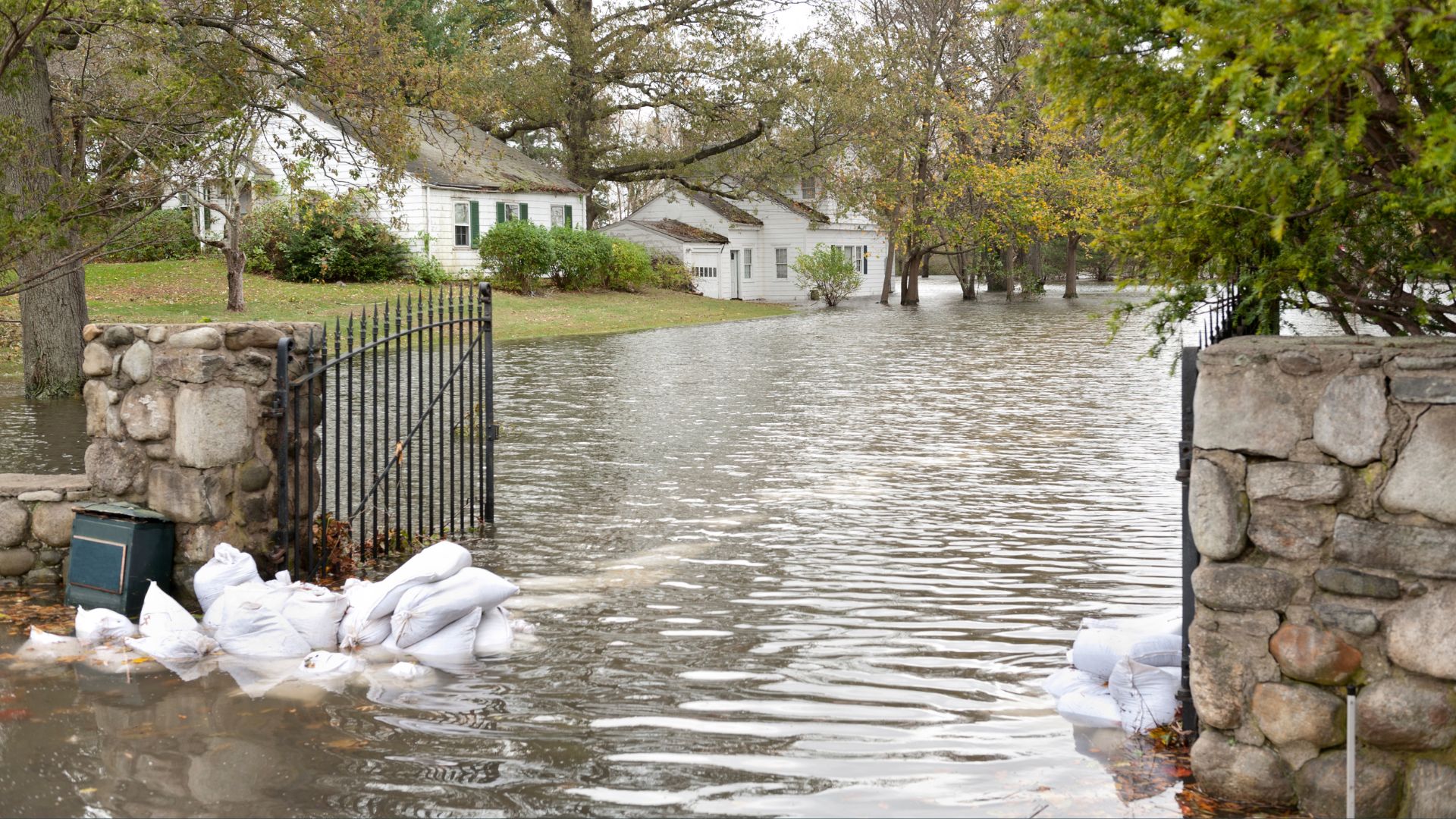
At 97 years old she had watched everything she and her husband worked for and built, floating away in the river from the devastating hurricane Helene in the North Carolina hills. And yet, the next morning she smiled and started to sing to Jesus. She was cold and had to be held up behind a tarp to use the restroom, and yet she still smiled and sang to Jesus. It will take a minimum of 18 months for power to be restored, she still smiled and sang to Jesus. She ate food damaged by debris-filled river water for a week to survive! And yet, she still smiled and sang to Jesus.
When I saw a picture of her sitting outside in an old lawn chair, her frail body covered with a quilt, my soul ached for her but also rejoiced in her faith. The verse from Matthew 6 where Jesus exclaims “O you of little faith,” could not be said about this dear believer. She simply utterly trusts Him to care for her no matter the circumstances or outcome. She knows there is something greater going on and she shows us how to live in His power in the midst of the storm.
Never having been in this kind of situation, it made me wonder how I would react. Would I despair or trust? Would I smile and sing? Would I have ‘little faith’? Lord, may I have BIG faith because of who You are?
At the end of the passage from Sunday’s sermon, there are two commands:
Seek first the kingdom of God and His righteousness.
Do not be anxious about tomorrow.
If obeyed, how do those two commands make for ‘Big’ faith?
What would you want to follow your ‘And yet’ in similar situations?
May the Lord bless your pondering!
Francie Overstreet
EFCC Member


It’s Ok to Keep it Quiet
I remember the first time I experienced the idea of fasting in real life. I was 19 years old working for the Junior High department here at Emmanuel Faith, and we were down in San Diego cleaning up some trash for one of the intern-planned events. Lunchtime came and the staff and volunteers started passing out the sack lunches to the students.
I went to give a sack lunch to the intern who had planned this event, and he politely said, “No, thank you.” I asked him, “Oh, did you already eat?” And he said, “No, but I’m good.”
Knowing what a long day we had already had, I pushed the subject since I didn’t want him to get too weak! So I asked, “Why don’t you want to eat any lunch?!”
He said, “I’m fasting today.” This was the first time I had heard of someone doing this as an actual practice so I asked, “How come?”
He replied, “I knew this event would be a long day and I wanted to keep my heart focused on God. So I’m fasting to keep focused on Him. Every time I feel hunger, I pray. But right now, I’m not even hungry!”
“Wow,” I said, “I didn’t even realize!” He said, “That’s the idea. It’s not for anyone else. It’s just between God and me.”
He didn’t know it then, but he set an example for me that would stick with me for decades. It’s ok to keep things quiet that are just between you and the Lord. Today's culture makes it so easy to fall into wanting to shout out the good you are doing. And I genuinely think there is a place for that when it’s not done in a boastful way. But with fasting, that is a practice designed to be kept quiet. And that is what will make it that much more effective.
Kim Freels
Digital Media Specialist

My Fasting Journey
I began to write this devotion to share my “motivation” for fasting and quickly switched to my struggle with fasting but have landed on the title “My Fasting Journey”.
When I first learned about fasting, I dialed it down to refraining from eating as I prayed for an answer to my prayers. The battle for control was being fought by me. His grace and love were my answered prayers, years later.
Sometimes the prayers concerned me, but often they were for others. I remember fasting for those with health issues. I thought this would be a way to get my prayers answered. Many times, I didn’t have the answer by the end of my fast and I wasn’t sure “how I did” because there was no answer. I was slowly learning; my thinking was wrong.
As a person who has battled food issues, I now understand that my motivation was off base for a variety of reasons. My striving to not eat was not what He was looking for. I then had a friend say, “perhaps you should fast from things other than food.” I began to then change what I fasted from.
Last year I was visiting my daughter who was about to give birth. The Sunday before her due date we attended her church. The next day they were beginning a social media fast for 30 days. My first thought was “No way.” I admit this because social media was a “coveted” battle for my time. When I heard myself say “I could never do that” I knew He was beckoning me to do so. I knew I couldn’t do it alone, but with Him I could do this. I pressed in the next day.
I quickly realized that “extra” time with Him was so precious as compared to the one finger scroll on the phone that I was fasting from. What I thought would be a struggle was actually a period of freedom to spend with the Lord. I mean complete unattached freedom from the world.
The motivation is no longer set to “what I can do” or if I “do well” with the fast. I have experienced His gentleness in my journey of fasting. I have felt His trustworthy nature which affords me complete dependence on Him. He has led me and guided me through the many fasts and shown me things I would have never seen if my focus was not on Him. I can have tough days with the fast and He is still with me. Today, I prefer to cease striving, and stay close to my King. Yet, day by day -it is still a journey as He continues to open my eyes when I choose to fast.
Tammy De Armas
EFCC Member

“Thank you God for this meal....”
James 1:17 says that every good and perfect gift comes from above. 1 Timothy 6 mentions we have a God who richly provides us with everything for our enjoyment. And...spoiler alert, Matthew 7 tells us we have a very good Father in Heaven who knows best, how to give good gifts to his children.
Among the many good things God saw fit to bless us with, he’s given us good good food. I thank you God for barbecued brisket, with a peppery rub, cooked low and slow. Delicious! How amazing is cheesecake or chocolate pie! Hot from the oven fresh baked bread or in season strawberries, a sweet ripe banana or even just a perfectly brewed cup of coffee. Like the Israelites after Egypt, our bodies could have found sustenance with something like Manna, but how generous is our God to bless us with such a wide and delicious variety of food?
He even chose delicious food as a beautiful symbol to remember him by. 1 Corinthians 11:23-26 (NIV)“.....Jesus, .....took bread, and when he had given thanks, he broke it and said, This is my body, which is for you; do this in remembrance of me.
And....this cup is the new covenant in my blood; do this, whenever you drink it, in remembrance of me 26For whenever you eat this bread and drink this cup, you proclaim the Lord's death until he comes.
Do this—drink wine, chew bread and remember me. Remember the way I lived life, remember the way I loved you, remember my sacrifice, remember the price that I paid for you. Remember often.
I love that Jesus connected remembering the most important, earth-shattering event that’s ever happened, with a meal.
In Matthew 6 it appears Jesus assumed his followers would at times, practice fasting—abstaining from eating food. Perhaps this was a form of intense prayer, prayer that involved the whole mind and body hungry for communion with God. At other times, as Ryan mentioned last week, it was a faith filled act of generosity toward someone else—choosing to forgo eating meals for a time in order to nourish someone else who needed it more. Or fasting could be a spiritual discipline, a simple act by a Christ follower to deny oneself, to grow more like the one who so willingly gave it all.
Whatever the motivation, Jesus taught that the practice of fasting should be done quietly, with humility—something kept just between you and your heavenly Father. Then our all-seeing and all-knowing Father, the giver of all good things, he promises to reward us when we seek only his approval and his applause.
Donielle Winter
EFCC Member


To Fast or Not to Fast?
“And when you fast, do not look gloomy like the hypocrites, for they disfigure their faces that their fasting may be seen by others. Truly, I say to you, they have received their reward. But when you fast, anoint your head and wash your face, that your fasting may not be seen by others but by your Father who is in secret. And your Father who sees in secret will reward you.” Matthew 6:16-18
With apologies to William Shakespeare in Hamlet’s ‘to be or not to be’ soliloquy, this is the question. Why should or shouldn’t we fast? There are many examples of fasting in the Bible. Jesus fasted in the wilderness for forty days. Anna (Luke 2:37) “worshiped God with fasting and prayer night and day.” Daniel mourned over the sin of the Israelite people that caused their captivity in Persia and fasted for three weeks in contrition and seeking God. Even unbelievers fasted as the King of Nineveh proclaimed a fast to avert God’s prophesied destruction of Nineveh. There are many instances of fasting following someone's death. There were and are various reasons for fasting. However, Jesus did not stress fasting but assumed that His followers would fast as He said, “And when you fast………But when you fast” in Matthew 6:16-18.
In our current sermon series in Matthew, this is the third ‘righteousness’ practice of the Pharisees that Jesus would correct. All three practices, offerings, prayer, and fasting, are encouraged but it is their intent and motivation. The Pharisees would display their ‘righteous’ acts before men and did it to be seen. Fasting is done to God, for Him, and not to impress others. And if a believer fasts privately, in contrition, in surrender, and in devotion to God, the promise is “...your Father who sees in secret will reward you.”
There is no formula for the length or timing of fasting. It can be for a day, days, or longer. There are multiple reasons for fasting, but ultimately it seems to draw us away from earthly distractions and into greater trust of God.
In a difficult desert time in my life, I was seeking an answer to what if anything God wanted me to do. I went away for three days to be alone and chose to fast from solid food and everything that distracted me (no phone, no TV, etc.). I spent a lot of time walking and talking with God, being silent, seeking Him, weeping, resting, listening, and then He answered me during the last day away. There have been other times of fasting, but that one has a significance that changed me profoundly.
Jesus was asked by John the Baptist’s disciples why He and His disciples did not fast as they did. (John 9:14-17) Jesus’ answer teaches that in His Presence there is no need for mourning over sin through fasting. Our joy is in His permanent Presence in each believer as our sin is forgiven.
However, Jesus clearly says, “And when you fast…”. The question is to fast or not to fast? How will you answer that? Might the LORD want you to engage in this practice? If you do, don’t tell anyone!
Francie Overstreet
EFCC Member

Fast Lessons on Dependance
In my corporate job, there were days when breakfast burritos or donuts would magically appear in the office. Those mornings felt special—there was something about the surprise of an undeserved treat that made the day brighter. But sometimes, those treats made things much harder.
I remember times when I had committed to fasting, usually to learn a deeper dependence on the Lord. And wouldn't you know it—on those very days, the enemy seemed to know. Instead of showing up on any regular morning, the donuts or breakfast burritos would arrive on my fasting days! Walking by the breakroom, I'd catch a glimpse of that familiar pink donut box, and my commitment would be tested. I'd sit at my desk, trying to focus, while the smell of food lingered, making me second-guess my decision. Occasionally, someone would even place a burrito on my desk, as if to taunt me!
What always surprised me was how these unexpected challenges arose when I dedicated something to the Lord. It didn’t take much for me to reconsider my commitment. Fasting is meant to foster dependence on God, yet sometimes I found myself discouraged, wondering if I could resist.
Jesus taught that fasting should be a private act of devotion to God—not for show, like the Pharisees who fasted with gloomy faces to make sure everyone noticed (Matthew 6:16). But even when I didn't follow through perfectly, I learned something valuable: we need Jesus for everything. He is more satisfying than any food we could ever eat, and without Him, our hearts truly are empty.
Here's the takeaway: fasting is a simple but powerful way to practice depending on the Lord. It challenges us, but it also draws us closer to Him. Instead of dreading the difficulties that may come, we should look forward to how God will meet us in the middle of them. So the next time you fast, or even consider fasting, ask God to give you the strength and clarity to follow through. And when the temptations come—whether in the form of donuts, burritos, or anything else—remember that He is your ultimate provider.
Jeremy Johnson
Executive Pastor


Two Masters
Matthew 6:24
We love our two-year-old yellow lab, Finely. He’s the best dog. He’s so sweet and affectionate, he loves a good run, and he’s nominally obedient. He does have some bad habits, though. His primary fault is that he thinks he’s a person. He wants to sit at the dinner table with us and believes that he’s a full member of the family. He’s not wrong. One of his other bad habits is that he barks at people when they first come to our house.
So, we called our awesome dog trainer to help us. When we told our daughter that we were going to work with a trainer, Avery said, “How do you improve upon perfection?” Ha! We decided we’d try to improve. Chris came over and began working with Finley… well, really, he started working with us. The truth is, the dog isn’t the problem, his owners are. We’re the problem, it’s us! The issue is that he gets different instructions and expectations from me and Kelly than he does from our kids. He doesn’t know what to do or expect because he has multiple masters (and some give him more treats than others).
Jesus knew that it was impossible to live with two masters. He said,
““No one can serve two masters, for either he will hate the one and love the other, or he will be devoted to the one and despise the other. You cannot serve God and money.” Matthew 6:24
Jesus is so definitive. He doesn’t say it’s hard to serve two masters, he says it’s impossible. And Jesus knows that money is constantly vying to be obeyed; vying to be our god.
So, here’s the question we all must answer: are we following Jesus alone or are we trying to serve two masters? Think about your life and ask Jesus to reveal to you ways that you might be trying to serve something other than him.
Pastor Ryan Paulson
